
“LT” is not a universal machine category, so a quotation using that label does not tell you whether you are buying a pneumatic tool, a table machine, or an automatic line. By the end, you will know which hardware, specifications, services, installation items and acceptance tests to demand before placing an order.
Key takeaways
- Treat “LT” as a model label until the supplier defines the machine.
- Ask for strap size, sealing method, tension range and package limits.
- Test the machine on your cartons before signing the delivery note.
- Compare installation, training, spares and warranty—not only the quoted price.
What does “LT strapping machine” mean in a quotation?
“LT” is not a universal machine class or Indian standard designation. In an lt strapping machine in Pune quotation, treat it as a model or series label until the supplier identifies the machine type, compatible strap material, sealing method, package-size limits and tension range.
Request these documents and figures before comparing the lt strapping machine supply:
- Exact model number and a serialised technical datasheet
- Machine layout showing dimensions, weight, arch opening or tool position, conveyor height and service clearances
- Cycle-rate test conditions, including strap length, package size, operator arrangement and uninterrupted strap supply
- Line-item quotation separating ex-works supply from delivered, installed and commissioned supply
- Site scope covering levelling, electrical connection, conveyor integration, trial runs with your packages, training, travel and lodging
“Complete machine” describes a sales package, not a guaranteed contents list. Unless each item appears on the packing list, confirm whether the quotation includes strap, compressor, air hose, conveyor, installation, commissioning and spare parts. PP or PET rolls, replacement heaters, cutter blades, tension wheels and tool kits can be separate items.
Factory testing also does not prove successful site operation; demand a timed trial with your actual cartons, bundles or pallets and a written acceptance result.
Which machine parts, accessories and specifications should come with it?
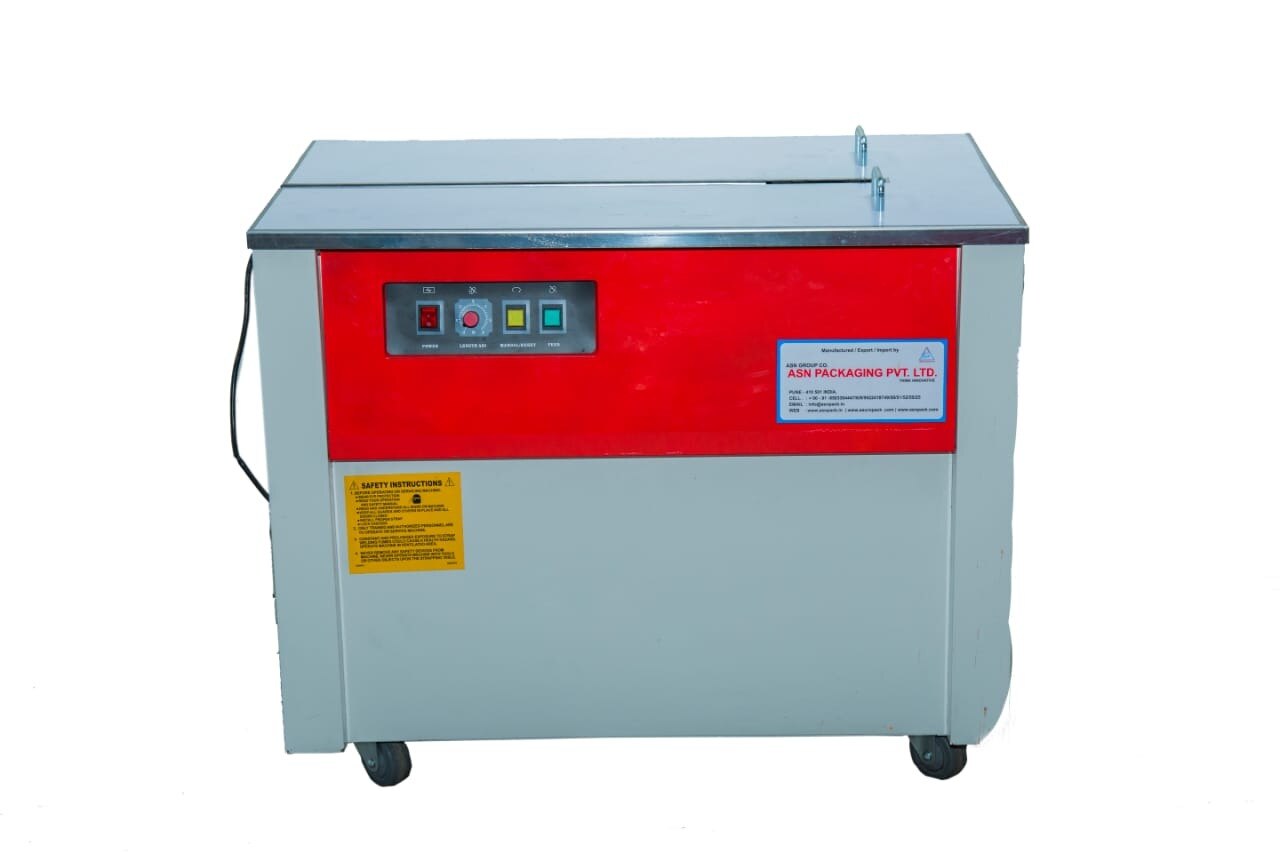
Your packing list should identify the machine body or strapping head, strap-reel mandrel or dispenser, work table or frame, control panel, strap guides, cutter, and the exact tensioning and sealing mechanism. State whether the unit is table-mounted, floor-standing, portable, or intended for a conveyor line.
Included supply and common exclusions must appear as separate line items:
| Normally supplied | Confirm separately |
|---|---|
| Head, frame or table, controls, guides, mandrel, cutter, tensioner and sealer | PP or PET strap, spare rolls, heating elements, cutter blades, tension wheels, sensors, fuses, tool kit, compressor, air hose and regulator |
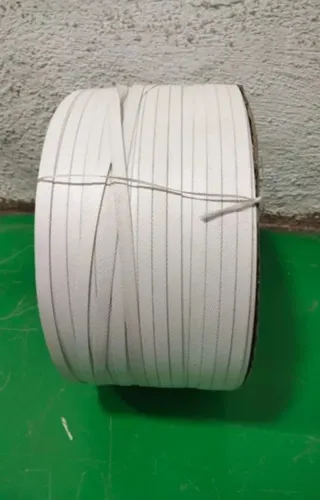
Request the strap limits in writing: width, thickness, tensile grade, core diameter and maximum roll weight. PP, PET and steel strap are not interchangeable; obtain written confirmation for the material and grade you will run.
Also request these site specifications:
- Electrical supply: 230 V single-phase or 415 V three-phase, 50 Hz, connected load, protection, cable size and earthing.
- Pneumatics, only where used: working pressure, air consumption, filter requirement, hose diameter, fitting size, compressor and air-treatment inclusions.
- Documents: manual, wiring diagram, maintenance schedule and recommended spares.
Ask the LT strapping machine manufacturer or packaging machine manufacturer in Pune to put every item in a serialised packing list. A “complete machine” statement does not include consumables or commissioning support unless the quotation says so.
How is the LT machine installed and operated on a real package?
1. Mount or position the LT strapping machine in Pune on a level surface, leaving clearance for pallets, coils and irregular loads. Keep the power isolator accessible, prevent hose drag across walkways, and mark finger-trap points near the tensioner, cutter and sealing head.
2. Load the specified strap reel onto the mandrel or dispenser. Thread the strap through every guide, keeping it flat, centred and free from twists; misalignment causes feed jams, recoil and uneven tension.
3. Connect power and, only where the configuration uses pneumatic clamping, tensioning, arch movement or handling, connect the compressor, filter-regulator, drain, hose and specified fitting. Confirm pressure, air consumption and leak-free connections before cycling.
4. Place the actual package against the guide or beneath the arch, then position the tool squarely over the strap path. Select tension below the package’s damage limit; machine capacity does not override carton compression strength, strap grade or weld strength.
5. Tension the strap, form the joint using the specified friction weld, heat seal or metal clips, and cut the tail. Reject a joint with incomplete fusion, uneven pressure, burn-through, a loose tail or visible strap damage.
6. Remove the package, clear the strap path and prepare the next cycle. Acceptance testing must use the buyer’s actual carton, coil or pallet dimensions, weight, surface condition, strap and required tension—not an empty carton—because production loads expose weak welds, corner crushing and incomplete tensioning.
When is an LT machine the right purchase for your packing operation?
Buy a pneumatic LT setup when you strap recurring bundles, cartons, pallets or metal loads and need faster, more repeatable joints than a hand tool provides. A search for packaging machine manufacturer lt strapping machine in pune should compare the whole lt strapping machine supply, not just the quoted head price.
| Option | Labour and operator time | Portability and compressor dependence | Joint, throughput and cost |
|---|---|---|---|
| Pneumatic LT setup | Low physical effort; quick cycles | Portable around the work area; needs treated compressed air | Consistent joints and higher throughput; medium capital cost; recorded tension only if the controller supports it |
| Manual tensioner | High labour and slower cycles | Most portable; no compressor | Variable joints and low throughput; lowest capital cost; no recorded tension |
| Battery-operated tool | Moderate labour; battery charging interrupts work | Portable; no compressor | Consistent joints and medium throughput; higher tool cost; recorded tension only on equipped models |
| Semi-automatic table machine | Low operator effort for cartons and bundles | Stationary; usually electrically powered | Consistent joints and repeatable cycles; medium-to-high cost; limited to table-size work |
| Fully automatic arch line | Minimal operator time | Fixed installation; line utilities required | Highest throughput and consistency; highest capital cost; best control and data capability |
Choose pneumatic LT equipment for repeated loads, not occasional packing. Reject it for airless sites, infrequent jobs, or highly repetitive pallet work that warrants an arch line; reject any option that cannot provide controlled, traceable tension when records are mandatory.
- Compare strap waste, compressor electricity, wear parts, air-filter servicing, installation and downtime against the purchase price or outsourcing charge.
- Add hose, regulator and maintenance costs before approving the investment.
How should you compare a Pune supplier and accept the delivered machine?
Compare the supplier on what arrives, what is tested and who supports it after installation. Ask every LT strapping machine manufacturer or packaging machine manufacturer in Pune for a live trial using your actual strap and package, written output conditions, a line-item packing list, installation scope, operator training, response times, spare-parts availability and warranty exclusions.
| Supply basis | Confirm in writing | Cost or risk if omitted |
|---|---|---|
| Ex-works | Freight, wooden packing, insurance, unloading, GST and site installation | You arrange transport and commissioning |
| Delivered and commissioned | Levelling, electrical connection, trial runs, training, travel and lodging | Clearer handover, but verify exclusions |
- Before acceptance, match the serial plate to the quotation and check voltage, phase, connected load, earthing and protection. Test for air leaks, correct strap alignment, tension adjustment, consistent weld or seal, cutter action and sensor response.
- Check every listed accessory, including the dispenser, hose, regulator, guides, tool kit, fuses and spares. Reject “complete machine” if an item on the packing list is missing.
- Take the manual, wiring diagram, pneumatic diagram, maintenance schedule, recommended spares list and named service contact at handover.
- Establish whether ASN Packaging PVT LTD manufactures the selected model in Pune, supplies it from Pune, imports components, and offers installation and Maharashtra service; record each fact in the purchase order.
- For routine care, remove strap dust, inspect weld or sealing parts, lubricate only approved pneumatic components, drain the receiver, and replace worn cutters, guides, heaters or tension wheels. The purchase order should also state whether travel, labour, freight, wear parts and downtime are excluded from warranty.
Frequently asked questions
What does “LT strapping machine” mean in a quotation?
“LT” is not a universal machine class or Indian standard designation. Ask the supplier to identify the machine type, compatible strap material, sealing method, package-size limits and tension range.
Which parts and specifications should come with an LT strapping machine?
Confirm the strap dispenser, tensioning and sealing assembly, tabletop or conveyor, electrical controls, tools, manuals, spare parts and stated specifications for strap width, thickness, tension, package size and power supply.
How is an LT strapping machine installed and operated?
Position it on a stable, level surface, connect the specified power supply, load the strap through the threading path, set tension and heat or seal parameters, then test it on the actual package.
When is an LT strapping machine the right purchase?
Choose it when your package sizes, strap material, throughput and required tension match the machine. Consider a different configuration when you need high line speed, automatic feeding or large package variation.
How should you compare a Pune supplier and accept the delivered machine?
Compare written specifications, installation, operator training, warranty, response time, consumables and spare-parts support. Run a documented acceptance test using your cartons and strap before signing delivery.