
When a heat-shrink tunnel stops, the safest recovery depends on whether the fault is electrical, thermal, mechanical, control-related, or upstream at the sealing machine. You will be able to isolate the equipment safely, separate operator checks from technician work, choose repair or replacement, and prepare the information a Pune service team needs.
Key takeaways
- Match the repair to the fault before ordering replacement parts.
- Isolate power, heat, and stored pneumatic energy before opening the tunnel.
- Send fault codes, photos, machine details, and operating history to the service team.
- Approve repairs only after a loaded trial confirms temperature, sealing, and conveyor performance.
Which recovery option fits the tunnel machine failure?
A stopped tunnel needs a response matched to the failure, not an automatic parts order. Use this decision when searching for packaging machine company tunnel machine for recovery options in pune.
| Option | What it means | When it applies |
|---|---|---|
| Remote diagnosis | Review settings, alarms, photos, and measured values | Choose it for clear settings errors or fault codes that do not require panel access. |
| On-site repair | Technician repairs accessible electrical, sensor, fan, conveyor, or pneumatic faults | Choose it when inspection, testing, or adjustment is needed at the line. |
| Component replacement | Replace failed heaters, thermocouples, SSRs, contactors, motors, gearboxes, belts, bearings, fuses, or sealing cutters | Choose it when the tunnel structure and surrounding systems remain sound. |
| Workshop repair or exchange | Repair or exchange a control or conveyor subassembly; retrofit obsolete controls | Choose it when the module needs bench testing or proprietary parts are unavailable. |
| Rental or loaner | Install temporary tunnel capacity | Choose it when downtime threatens a committed dispatch. |
| Complete replacement | Replace the tunnel and its integrated systems | Choose it when the chamber, frame, conveyor, insulation, and safety controls are deteriorated or obsolete. |
Before approving work, separate the tunnel from the upstream L-sealer, side-sealer, or sleeve wrapper. A sealing fault can mimic a tunnel failure, and repairing the wrong machine wastes time and parts. Where the frame and insulation remain sound, component-level recovery usually gives the shortest sensible route.
How do you match each tunnel fault to the right repair?
Match the repair to the fault evidence, not to the most expensive part. This approach makes tunnel machine repair in Pune faster and prevents replacing a controller when the real problem is airflow, wiring, or power quality.
1. No heat: Check the 440 VAC three-phase supply, fuses, breakers, heater continuity, SSR or contactor output, thermocouple type and placement, PID output, and chamber airflow in that order. Replace the controller only after these checks pass.
2. Uneven shrinkage: Inspect fan operation, baffles, blocked air paths, package loading, aperture size, film specification and thickness, conveyor speed, and temperature. A slower conveyor can restore dwell time without overheating the film.
3. Conveyor stoppage: Remove obstructions, then check belt tracking, seized bearings, chain and sprocket wear, gearbox, coupling, and speed-controller output before changing the belt.
4. Film burning or seal failure: Verify temperature, dwell time, film thickness, and residue around heaters or sealing parts. Check the upstream L-sealer or side-sealer because a tunnel cannot repair a weak or contaminated seal.
5. Overload trips, sensor faults, and controller errors: Record the code, inspect wiring and connections, and test the affected motor, sensor, or input. Repeated trips require isolation; do not keep resetting them.
6. Phase loss or imbalance: Stop the tunnel and have a qualified technician measure all three phases. Do not run with missing, unstable, or severely imbalanced supply, burning smells, smoke, exposed wiring, or a jammed conveyor.
What must you do before opening or repairing the tunnel?
Before opening or repairing the tunnel, isolate it as a 440 VAC three-phase machine and account for every energy source: electrical supply, stored heat, conveyor movement, and unexpected fan operation.
- Switch off the main disconnect, isolate upstream supplies, and apply lockout/tagout. Prevent conveyor movement by isolating its drive and securing the belt or chain against motion.
- A qualified person must verify zero electrical energy with an approved meter, testing the meter before and after verification. Do not open a panel because the display is dark.
- Wait for the heating elements and chamber surfaces to cool. Check residual heat before opening guards, and treat the cooling fan as hazardous because it can continue running or stop unexpectedly.
- Operators may check film tracking, conveyor obstructions, visible residue, settings, and external fault indications. Technicians alone should open panels, test live circuits, replace heaters, tighten terminals, or work on interlocks.
- Never bypass a fan, over-temperature device, emergency stop, guard switch, or conveyor protection to restore production. A bypass removes a designed safety function and can cause fire, crushing, or severe burns.
Which maintenance tasks prevent repeat tunnel failures?
A fixed tunnel machine maintenance schedule catches contamination, tracking faults, and electrical deterioration before they become another shutdown.
| Interval | Tasks | Failure prevented |
|---|---|---|
| Daily | Remove film residue and loose fragments from the chamber entrance, conveyor, heaters, and fan guards. Check abnormal noise, vibration, temperature, and belt movement. | Heater fouling, fan restriction, belt damage, and fire risk |
| Weekly | Check belt tracking, rollers, bearings, accessible fasteners, heater terminals, thermocouple wiring, fan guards, chamber insulation, gearbox condition, and visible pneumatic components. | Uneven shrinkage, sensor faults, conveyor stoppage, and drive wear |
| Monthly | Under electrical isolation, inspect connections, enclosure gaskets, and condensation. Clean panels with a dry method, test the emergency stop and guard interlocks, and review overload and controller history. | Terminal corrosion, moisture-related control faults, unsafe operation, and recurring trips |
Pune dust can clog fan guards and settle around heaters, while monsoon humidity attacks terminals and enters damaged enclosures. Inspect those points rather than treating heater replacement as the complete maintenance plan.
Contaminated film or packaging supplies also leave residue on the conveyor and chamber entrance. Record each defect and clean the source area; repeated residue often signals poor material storage or a sealing problem upstream. Perform monthly electrical work only after lockout/tagout and zero-energy verification by a qualified person.
What information should you send before requesting recovery support?
Send a service team enough evidence to separate a settings adjustment from a parts visit before anyone travels.
1. Record the machine model, serial number, supply voltage and phase, package dimensions and weight, film material and thickness, fault code, temperature setpoint, measured temperature, conveyor speed, power symptoms, last preventive-maintenance date, and the exact time the fault began.
2. Attach clear photographs of the control panel, nameplate, chamber, conveyor, heaters, and wiring area. Include close-ups of damaged insulation, loose wiring, residue, belt damage, or displayed alarms.
3.
Use the information to identify the likely response: adjustment for incorrect settings, cleaning for residue or blocked airflow, repair for wiring or mechanical damage, component replacement for a failed heater, sensor, drive, or control, an exchange subassembly for a damaged electrical or conveyor module, or a new tunnel when the frame, chamber, insulation, conveyor, and safety system are beyond economical repair.
4. Agree on acceptance tests before tunnel packaging equipment service begins. Require cold electrical checks, emergency-stop and guard tests, empty-tunnel operation, temperature stability, conveyor-speed verification, and a production trial using the actual film and pack. Record shrink quality, upstream seal integrity, product temperature where relevant, and abnormal current, noise, or vibration.
How should you choose a Pune recovery partner and approve the repaired machine?
Ask the provider to diagnose the complete line, not only the tunnel. Confirm that its tunnel packaging equipment service covers tunnel type, heating arrangement, correctly rated heaters and controls, conveyor drives, upstream L-sealer or side-sealer inspection, and documented restoration of guards, interlocks, emergency stops, and over-temperature protection.
| Option | Best choice when | Main concern |
|---|---|---|
| Component-level repair | Frame, chamber, insulation, conveyor, and safety functions remain sound | Confirm parts ratings and test results |
| Exchange or retrofit | A control or conveyor subassembly is obsolete but the machine structure is sound | Check compatibility and future spares |
| Tunnel replacement | Several safety-critical or proprietary parts are obsolete | Validate line fit, utilities, and upstream sealing |
ASN Packaging PVT LTD can be considered when its industrial packaging equipment service scope matches the required electrical, thermal, conveyor, sealing, or automation work. Ask for a written fault finding, parts list, safety-restoration record, and acceptance plan.
Release the machine only after you verify:
- Stable temperature at the operating setpoint
- Conveyor speed against the required setting
- Emergency-stop, guard, and over-temperature functions
- Acceptable shrink quality and upstream seal integrity
- No abnormal current, noise, or vibration during an actual production trial
Related products
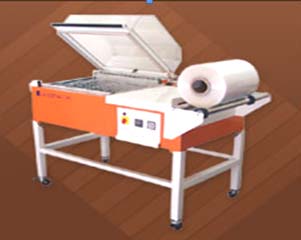 | ₹38000 It is suitable for heavy weight products for multiple packaging matrix, Requires two rolls of packaging materials pneumatic web sealer with stick... View product → |
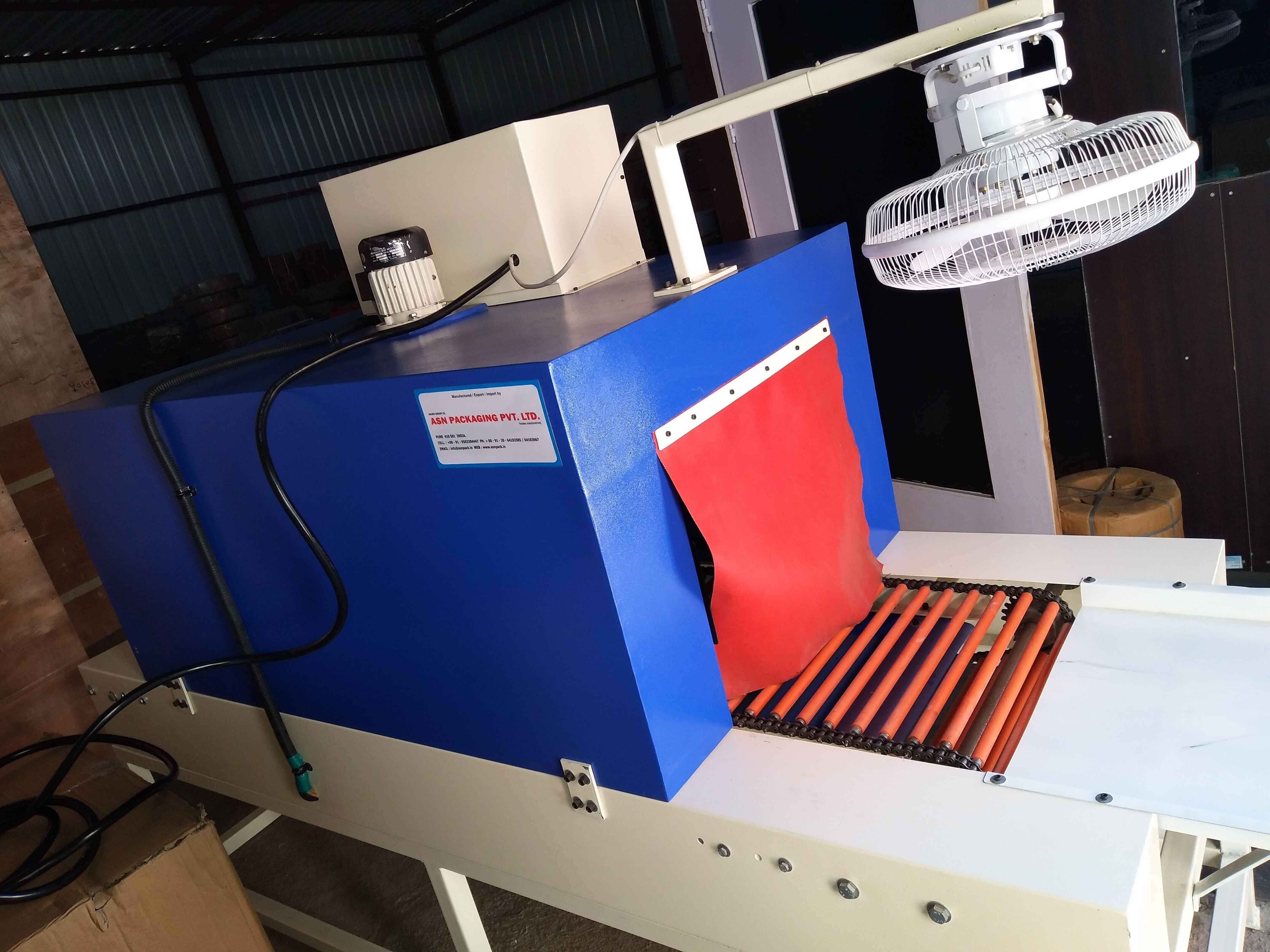
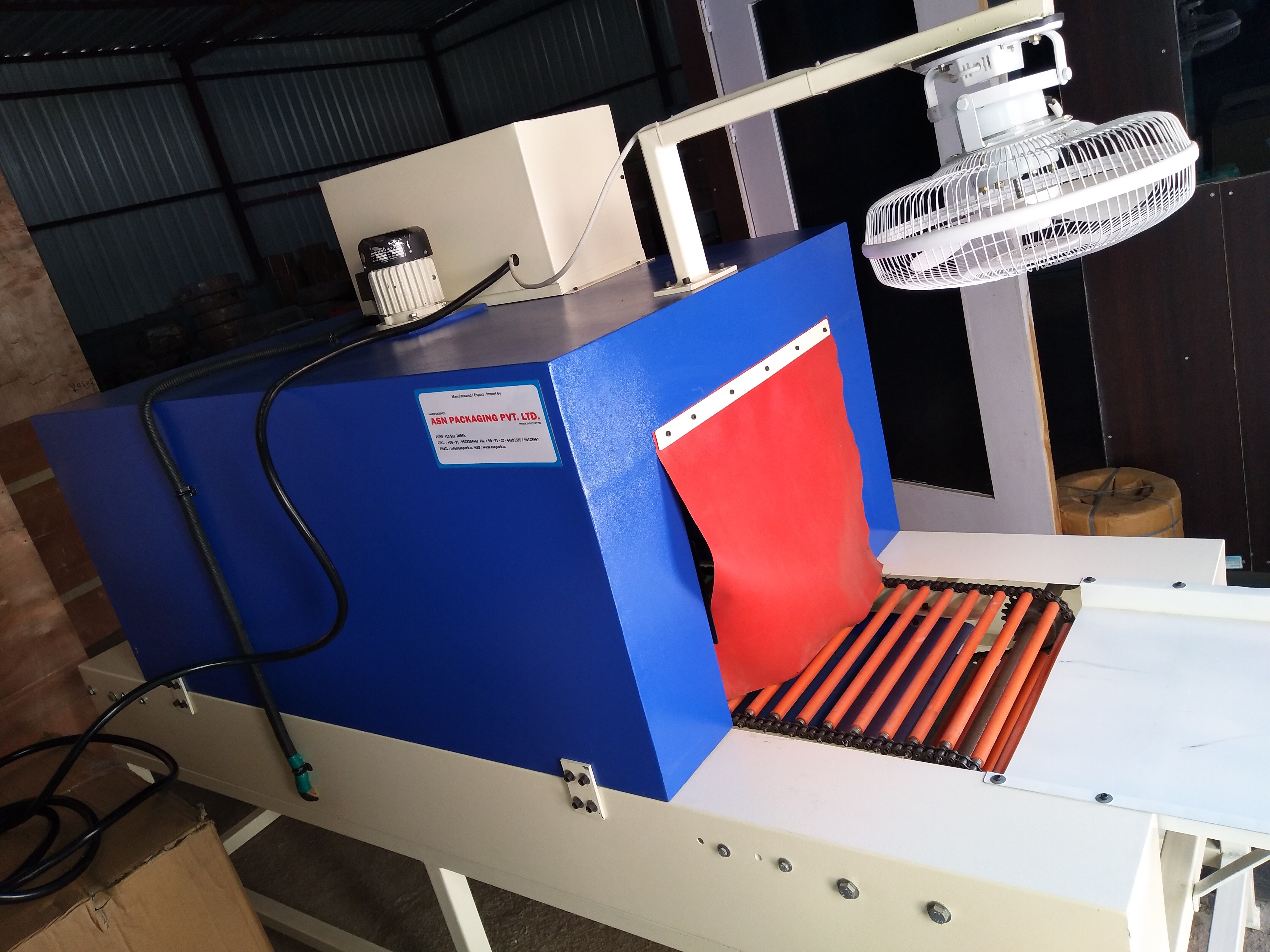 | ₹135000 SHRINK TUNNEL MACHINE MODEL 450 ASN SIZE 400 X 250 MM LENGTH 45 INCH POWER 6-8 KW , 440 VAC -3 PH HEAVY-DUTY STRUCTRE View product → |
Frequently asked questions
Which recovery option fits a tunnel machine failure?
Use troubleshooting first for control or setting faults, component replacement for failed heaters, sensors, motors, or controls, and mechanical repair for damaged conveyors, chains, bearings, or frames. Replace the tunnel only when the structure, controls, or parts availability make repair uneconomical.
What must you do before opening or repairing the tunnel?
Stop production, isolate electrical power, allow heated surfaces to cool, release compressed air, lock out the isolator, and verify zero energy before removing guards or panels. Record fault codes and machine settings before changing them.
Which maintenance tasks prevent repeat tunnel failures?
Clean film and product buildup, inspect heater banks, check airflow and fan rotation, lubricate conveyor components according to the machine manual, tighten electrical connections, and verify temperature sensors and interlocks.
What information should you send before requesting recovery support?
Send the machine model and serial number, fault code, photographs, affected product and film, tunnel temperature and speed settings, recent maintenance history, symptom timeline, and details of parts already replaced.
How should you approve a repaired tunnel machine?
Run an unloaded test, then a loaded trial using the normal product, film, conveyor speed, and temperature settings. Check shrink quality, seal integrity, temperature stability, noise, vibration, guards, emergency stops, and fault-free operation before restarting production.
Related products
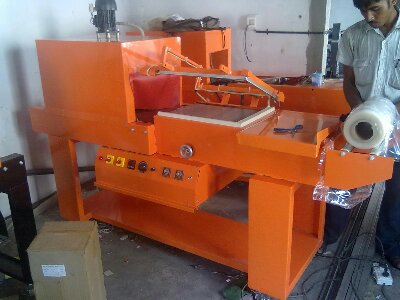 | COMBO SHRINK L-SEALER AND TUNNEL MACHINE ₹95000 Features: • Stainless steel product-loading tray • Durable silicone sealing pad • Long lasting heating element cool down function for delayed power... View product → |
 | ₹335000 The unit packs duly collated Automated & put in to In-feed Line Conveyor. The sealing shall be WEB SEALER suitable for above product. View product → |