
A tray sealer’s published dimensions and hourly rate do not tell you whether it will seal your tray, film and product reliably at your Pune plant. By the end, you will know what to demand in the specification, how to test the machine, and where a local supplier can reduce installation, tooling and downtime risk.
Key takeaways
- Test your product, tray and film before approving the tray sealer.
- Calculate output from cycle time, changeovers and operator handling—not rated speed alone.
- Put tooling, spares, training, service response and future formats in the quotation.
- Define seal strength, leak testing and appearance criteria before commissioning.
What a Pune supplier adds before you place the order
A local tray sealer supplier reduces specification and commissioning risk by testing your actual packaging process before equipment is shipped. Site access in Pune also makes measurements, installation corrections, operator training and post-start-up support faster than remote coordination.
1. Require an application or factory acceptance test using your trays, film, product and target recipe. Record output, seal integrity, leak or peel results, gas concentration for MAP, changeover time, alarm recovery and operator training. A machine that only powers on has not passed commissioning.
2. Confirm the specification against the physical pack: tray material, flange geometry, film structure, product contamination risk, sealing temperature, dwell time and pressure. Ask the tray sealer supplier in pune to run trials, because compatibility and flange variation determine the usable sealing window.
3. Demand a site acceptance test at your Pune plant. It should repeat the agreed recipe and verify utilities, guarding, interlocks, emergency stops, safe tool access and restart behaviour after a guard opening or power failure.
4. Attach a preventive-maintenance schedule and critical-spares list to the quotation. Include heater elements, thermocouples, gaskets, cutting blades, pneumatic valves, vacuum-pump parts, sensors, belts and PLC/HMI backups.
Searches such as packaging machine supplier tray sealer for details in pune should lead to questions, not a purchase order. A nearby supplier earns its value by proving the application, documenting acceptance and shortening repair delays when production stops.
Specify the tray, product and tooling—not only the machine size
A 190 × 142 mm tray and a 136 × 101 mm tray are not interchangeable because the tooling, film path and sealing area change with each footprint. Tray sealer specifications must pair each stated format with tray material, outside dimensions, depth, flange width, cavity layout and allowable dimensional tolerance.
Ask the supplier to confirm these product details for every format:
- Product length, width, height, fill weight and position inside the cavity
- Tray material, wall stiffness, flange flatness and rim design
- Film material, thickness, sealant layer and printed registration requirement
- Seal temperature, dwell time, cooling time and required peel or leak performance
- Product risks such as sauce on the flange, sharp bones, powder, oil or trapped particles
| Detail to compare | 190 × 142 mm format | 136 × 101 mm format |
|---|---|---|
| Tray and product fit | Confirm cavity depth, product height and headspace | Confirm reduced cavity volume and product clearance |
| Tooling scope | Tray pockets, denester, sealing plate and cutting die | Separate parts unless the quotation states otherwise |
| Production effect | Check lane arrangement and loading reach | Check whether fewer trays per index reduce output |
| Changeover impact | Record removal, cleaning and recipe-loading time | Price storage and installation of the second set |
A supplier trial must run your actual trays, product and film. It should prove seal integrity, product clearance, reject performance and changeover time; a machine that accepts an empty sample tray has not proved production compatibility.
Turn rated trays per hour into a realistic production target
Treat 350–500 trays per hour as a machine-cycle figure, not a shift promise. Calculate the target from the slowest operation, then remove planned downtime and rejects.
- Confirm the gross rate from tray pitch, lanes, cavities per index and cycle time. A four-cavity machine completing one cycle every 24 seconds produces 600 trays per hour before practical limits.
- Compare that rate with loading. If two operators place only 500 trays per hour, loading—not sealing—sets the line rate. Apply the actual run fraction after subtracting format changes, film and tray loading, cleaning, breaks and planned maintenance.
- Apply first-pass yield to account for seal rejects and damaged trays. Seven hours 15 minutes of running at 500 trays per hour with 92% accepted packs produces about 3,335 saleable trays, or 417 per scheduled shift hour.
A tray sealing machine supplier should calculate each format separately. Die-cut lids, roll film, disabled lanes, longer seal dwell, vacuum-gas cycles and cooling time change the cycle rate; a sauce-filled product also needs slower handling and more cleaning than a dry product. Record the result as saleable trays per shift, not only trays per minute.
Run the calculation during an application trial with the actual product, operators and longest planned run. Include cold starts, flange contamination, tray-height variation, film changes, format changeover and alarm recovery. Ask the tray sealing machine supplier to state the rated and achievable rates for every environment you will produce, then verify both at acceptance testing.
Match the film, sealing method and acceptance tests
Run the application trial with the production tray, film roll and representative product, not substitute materials. The supplier must show a stable sealing window and record the tray sealer specifications rather than handing over one successful cycle.
| Area | Trial requirement | Pass evidence |
|---|---|---|
| Film | State tray material, film structure, sealant layer, coating, thickness and flange variation. Test product or sauce on the flange and wrinkled film. | Seal remains continuous at the agreed temperature, dwell time and pressure; no channel leaks, burns or delamination. |
| Atmosphere | Separate gas flushing, vacuum-gas and simple gas replacement. Record permitted gas mixtures, inlet pressure, flow range and sealing-cycle time. | Residual oxygen meets the specified limit, measured with the named oxygen analyser and sampling method. |
| Seal performance | Test cold starts, maximum line speed, tray-height variation and the longest planned run. | The agreed leak test and peel-force test meet numeric limits, with rejects, alarms and recovery recorded. |
Put these results into the factory acceptance test and repeat them in the site acceptance test at the Pune plant. Acceptance must cover output, seal integrity, residual oxygen, changeover time, alarm recovery and operator training—not merely whether the machine powers on.
The tray sealer included equipment schedule must also identify the sealing tool, gas assembly, vacuum pump, film unwind, scrap winder, conveyors, guarding, change parts and test instruments; otherwise those items can surface as commissioning delays or extra cost.
Use the quotation to protect service, spares and future formats
A low machine price is not a low ownership cost if tooling, sensors or service response appear as extras after installation.
Require a line-item quotation and service agreement from the tray sealer supplier in Pune, with factory or application acceptance testing on your trays, film and product, followed by a site acceptance test at your Pune plant.
- Define the tray sealer included equipment: sealing tool, denester or manual loading arrangement, film unwind and registration, scrap winder, gas-flushing or gas-mixing assembly, vacuum pump, conveyors, guarding, controls, change parts and manuals. State whether the compressor, chiller, coder, checkweigher, metal detector and oxygen analyser are excluded.
- Name every format part: tray pockets, denester tooling, sealing plate, cutting die, film guides, conveyors and software recipes. Record the changeover time and the price of tooling for each future tray footprint.
- Set acceptance measures for output, seal integrity, leak or peel results, gas residuals where applicable, changeover time, alarm recovery and operator training. “Machine powers on” is not acceptance.
- Attach a preventive-maintenance calendar and critical-spares list covering heater elements, thermocouples, gaskets, blades, pneumatic valves, vacuum-pump service parts, sensors, belts and PLC/HMI backups.
- Write service response times, remote-support steps, Pune site attendance, labour rates and warranty exclusions into the agreement.
For a buyer comparing ASN Packaging PVT LTD with another tray sealing machine supplier, this schedule exposes the real difference: identified parts and defined remedies reduce mean time to repair instead of leaving downtime to negotiation. Specify how new films, tray materials and formats will be trialled before you approve additional tooling.
Related product
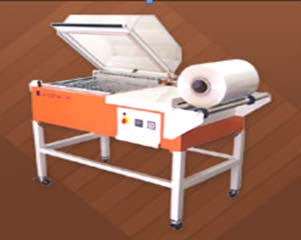 | ₹35000 We are engaged in manufacturing of qualitative range of shrink packaging Machines, which provide solutions for a wide variety of packaging... View product → |
Frequently asked questions
What should you specify before ordering a tray sealing machine?
Specify the tray material and dimensions, product characteristics, film, sealing method, tooling, target output and acceptance tests.
Why test the actual product and tray before buying a tray sealer?
Testing exposes sealing, loading, product contamination and tooling issues before the machine reaches your production floor.
How do you turn a tray sealer’s rated speed into a production target?
Account for cycle time, cavities, loading speed, film changes, cleaning, changeovers, rejects and planned downtime.
What should a tray sealer quotation include?
Request a clear list of tooling, film handling parts, conveyors, utilities, installation, operator training, spares, service terms and future-format provisions.