
A shrink tunnel does not make the film enclosure; it heats and directs airflow around a pre-sealed pack so the film contracts evenly without damaging the product. By following the machine sequence, matching film and operating settings, and testing the first packs, you can decide whether a tunnel fits your product, line speed, and Pune plant conditions.
Key takeaways
- Set temperature and conveyor speed together; changing one changes shrink quality.
- Size the tunnel opening for the largest loaded pack plus clearance.
- Inspect seals, film tension, wrinkles and corners on the first packs.
- Require trial packs, operating settings, drawings and service terms before commissioning.
What happens to a pack from infeed to discharge
The tunnel does not create the primary seal. An upstream L-sealer, side sealer, or sleeve wrapper first encloses the product in loose film; tunnel machine operation then contracts that film around the load.
- Products are collated and spaced so each wrapped unit enters the opening without touching the walls or the next pack.
- The sealing machine closes the film, leaving a loose sleeve, flap, or sealed edges around the product.
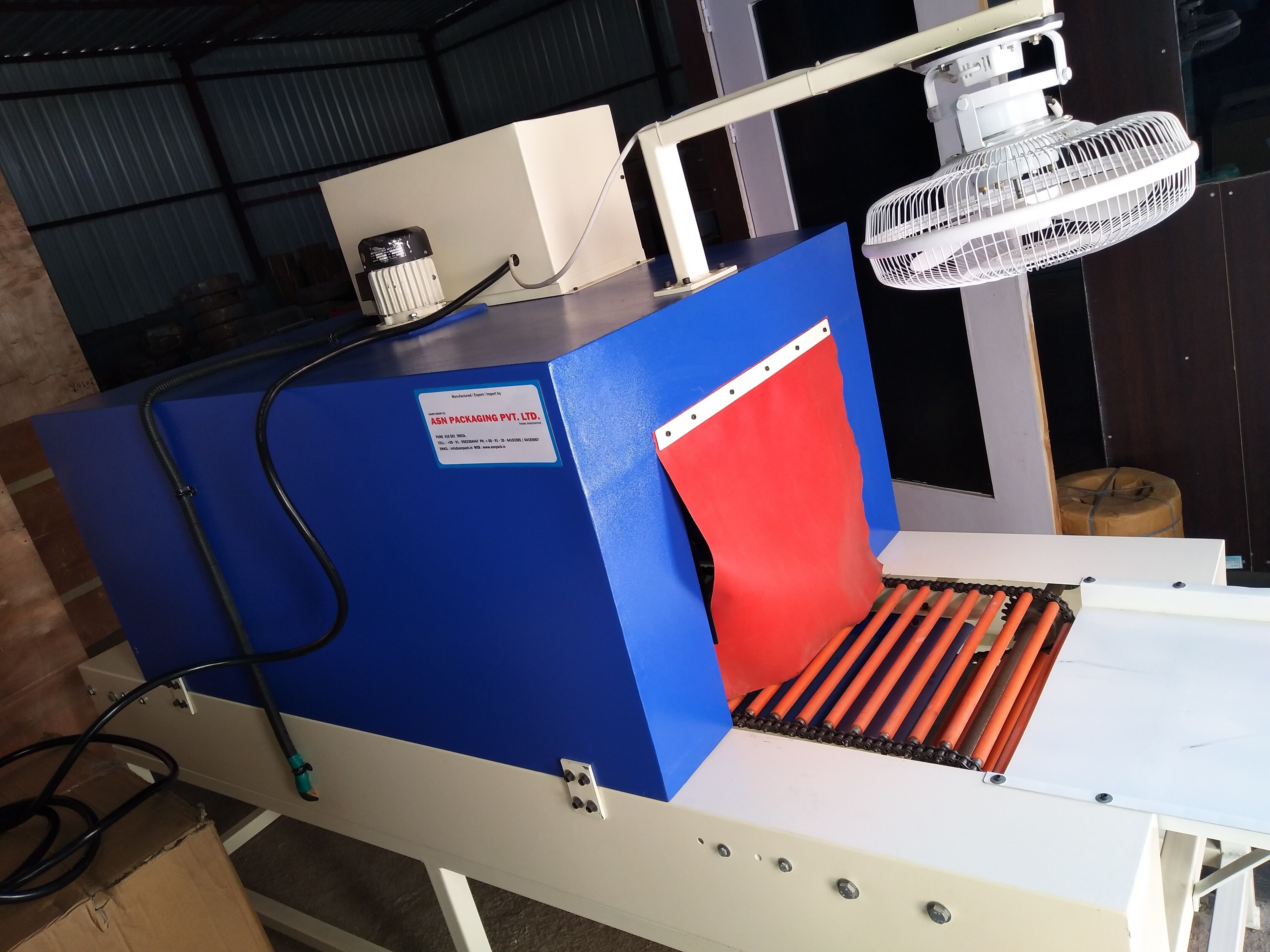
- The tunnel conveyor carries the pack through heated air. Fans distribute that air across the top, sides, and underside.
- Heat activates the film’s shrink properties, pulling it against the product and tightening corners, faces, and loose flaps.
- The pack exits into ambient air or a cooling zone, where the film stabilises before handling or case packing.
- At discharge, the finished pack should hold its shape, cover the product completely, and remain stable on the downstream conveyor.
Set temperature and conveyor dwell for the actual film, not the machine label. Commercial tunnels often operate across roughly 120–220 °C, with several seconds to a few tens of seconds of exposure; film type, gauge, pack mass, seal geometry, and product heat limits determine the usable point.
Excess heat burns film or distorts contents, while insufficient dwell leaves slack areas.
A tunnel machine in Pune deserves the same trial evidence as one elsewhere: run your actual product and film, record temperature and conveyor speed, and inspect seal coverage, wrinkles, burn-through, and pack stability at discharge. Tunnel capacity alone does not guarantee the line’s sustained output.
How film, temperature, airflow, and speed control shrink quality
Set the tunnel from the film supplier’s shrink window, then adjust dwell time and airflow before adding heat. Tunnel machine operation only contracts the film around the pack; the upstream L-sealer, side sealer, or sleeve wrapper creates the enclosure. Excessive heat cannot repair poor sealing or insufficient residence time.
Tune the settings in this order:
- Confirm the film type, thickness, shrink direction, and recommended temperature range from its technical data sheet. PVC, PE, and polyolefin films respond differently, so copy settings from another film only as a starting point.
- Set conveyor speed to provide enough dwell time for uniform contraction. If wrinkles, trapped air, or loose areas remain, reduce speed before raising temperature.
- Balance top, bottom, and side airflow so every face receives similar heat. A strong top blast with weak lower airflow leaves loose bottom film; a blocked filter creates hot spots.
- Set temperature below the point where the film yellows, holes, distorts labels, or weakens at the seal. Increase it in small steps while checking the product, not just the tunnel display.
- Maintain even film tension and leave consistent gaps between products. Overlapping packs block airflow and create loose corners.
Run packs from the near side, far side, front, rear, and centre of the conveyor. Check corner coverage, seal strength, film clarity, and product temperature. Store film away from Pune’s heat and monsoon humidity, and clean filters on schedule; dust changes airflow and makes a previously correct setting burn one area while leaving another loose.
How to size the opening and match the machine to your line
A 400 × 250 mm tunnel opening accepts only the largest packed envelope that passes through it: product width, product height, film overlap, conveyor fixtures, tilt, and side clearance all count. A 240 mm-high pack is not suitable if it needs 20 mm of clearance for film movement and airflow.
1. Measure the longest, widest, and tallest finished pack, including film tails and sealed edges. Test the largest expected pack, not the nominal sample, through the opening with its actual orientation.
2. Confirm the tunnel format. A continuous hot-air tunnel suits steady conveyor flow and shrink film; an intermittent or compact tunnel suits lower throughput but can create longer dwell times and spacing changes. Curtains improve heat retention, but dragging curtains can snag film or disturb tall packs.
3. Calculate capacity from conveyor speed and product pitch: packs per minute equals conveyor travel per minute divided by the distance occupied by one pack plus its gap. Convert that figure to packs per hour, then deduct film-roll changes, rejects, upstream sealing limits, and downstream interruptions.
4. Ask a tunnel machine in Pune supplier to run your product and film at the target orientation. Require recorded temperature, conveyor speed, pack mass, film type and gauge, warm-up time, and the percentage of acceptable packs.
The tunnel’s nameplate rate is not your line rate. Specify the required sustained packs per hour and keep capacity headroom for spacing, operator access, and restart after an emergency stop. Confirm heater shutdown, residual heat, fault indication, product removal, and controlled restart behaviour before acceptance.
How to inspect the first packs and correct defects
After the first run, inspect five consecutive packs and record the result before changing a setting. Tunnel machine operation is acceptable only when the film is sealed, evenly shrunk, and the product remains undamaged and stable.
Record these measurements:
- Pack length, width, height, mass, and film gauge.
- Seal width, continuity, and peel or burst resistance.
- Film coverage at corners, ends, and the underside.
- Air temperature at tunnel entry, centre, and exit; do not rely on the display alone.
- Conveyor speed, dwell time, and product-surface temperature.
| Visible defect | Finding to check | Likely cause and correction |
|---|---|---|
| Wrinkles or loose film | Uneven coverage or slack film | Increase heat or dwell gradually; check low airflow, excessive film width, and poor film tension. |
| Burn-through or holes | Browned film, melted seal, or exposed product | Reduce temperature or dwell; inspect sharp corners and excessive product temperature. |
| Poor corner coverage | Film bridges corners or leaves open areas | Increase airflow or dwell; correct product spacing and use the film’s specified shrink direction. |
| Weak or open seal | Interrupted seal line or film split | Correct the upstream sealer, contamination, or wet product; the tunnel does not create the primary seal. |
| Deformed or unstable pack | Product shifts, bows, or tips after cooling | Reduce heat and conveyor dwell; check overfilled packs, inadequate collation, and insufficient cooling. |
Change one variable at a time, then rerun five packs. Record the setting that produced an acceptable result so operators can repeat it after film, product, or speed changes.
What to require from a Pune supplier before commissioning
Do not commission on a nameplate rate alone. Require a signed acceptance plan covering your product dimensions and mass, film type and gauge, packs per minute, conveyor-speed range, tunnel-temperature range, warm-up time, connected load, and acceptable-pack percentage after a defined trial.
For a packaging machine supplier’s tunnel machine in Pune, verify the installation before fabrication is final:
- Measure the available three-phase, 50 Hz supply, voltage variation, earthing arrangement, isolator location, cable route, ventilation, floor loading, and clearance for maintenance.
- Ask for recorded trial data using your actual product, film roll, sealing equipment, spacing, and target rate.
- Require restart demonstrations after an emergency stop and power interruption, including heater shutdown, conveyor stopping, residual-heat handling, fault indication, product removal, and controlled cool-down.
- Put response times and stocked spares in writing for heaters, temperature sensors, belts, fans, filters, relays, drives, and control components.
| Supplier claim | Evidence to demand | Acceptance concern |
|---|---|---|
| Nameplate capacity | Sustained packs-per-minute log with rejects, film changes, and upstream cycle included | Tunnel speed exceeds the real line rate |
| “Works with any film” | Trial result naming film polymer, gauge, temperature, speed, and airflow setting | Burn-through, wrinkles, or loose film |
| Local support | Pune visit commitment, remote diagnosis process, spare-parts list, response deadline | Production stops waiting for one sensor |
A packaging machine supplier in Pune should identify the upstream sealer separately; the tunnel shrinks film but does not create the enclosure. ASN Packaging PVT LTD becomes a serious contender only if its quotation supplies these measurable records rather than generic suitability claims. Compare every industrial tunnel machine supplier on evidence, not catalogue wording.
Related products
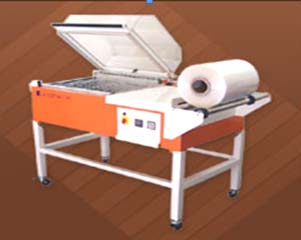 | ₹38000 It is suitable for heavy weight products for multiple packaging matrix, Requires two rolls of packaging materials pneumatic web sealer with stick... View product → |
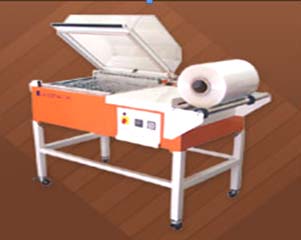 | ₹35000 We are engaged in manufacturing of qualitative range of shrink packaging Machines, which provide solutions for a wide variety of packaging... View product → |
Frequently asked questions
What happens to a pack inside a shrink tunnel?
An upstream L-sealer, side sealer or sleeve wrapper encloses the product in loose film. The conveyor carries it through heated airflow, which contracts the film around the load before discharge and cooling.
How do temperature, airflow and conveyor speed affect shrink quality?
Temperature supplies the heat, airflow distributes it around the pack, and conveyor speed controls exposure time. Excess heat can distort film or products, while insufficient heat or excessive speed leaves wrinkles and loose film.
How do you size a tunnel opening for a packaging line?
Measure the largest loaded pack, including its height and width, then add working clearance for stable travel and airflow. Check the conveyor width, pack orientation and the upstream sealer's output height before selecting the tunnel.
What should you inspect on the first shrink-wrapped packs?
Check film coverage, seal integrity, wrinkles, holes, loose corners, scorched areas, pack alignment and product damage. Record the temperature, airflow and conveyor-speed settings used for the accepted sample.
What should you require from a Pune tunnel-machine supplier before commissioning?
Request a machine drawing, utility requirements, conveyor details, operating ranges, safety provisions, trial-pack results, installation scope, training, spare-parts information and written service responsibilities.
Related products
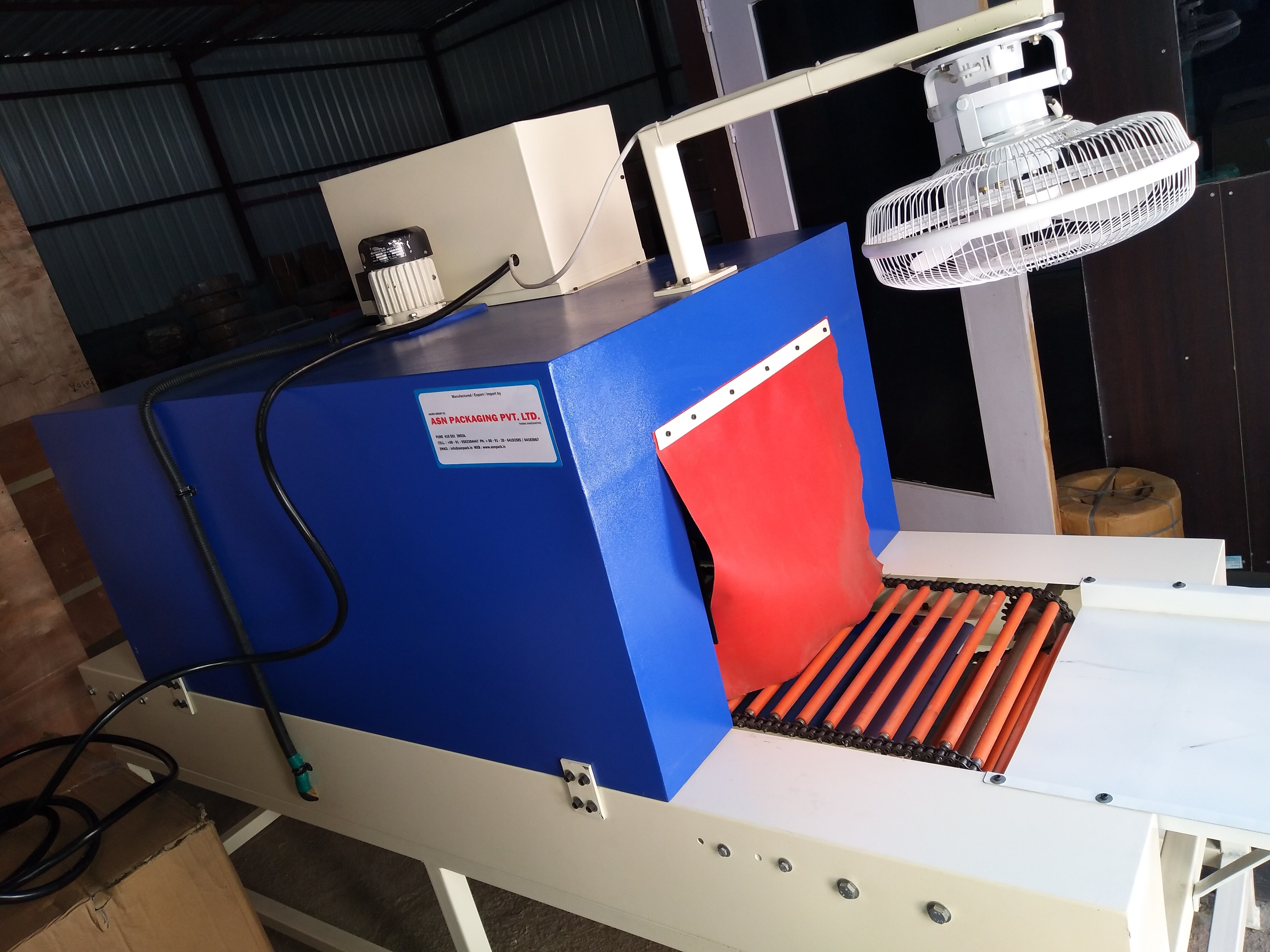 | ₹135000 SHRINK TUNNEL MACHINE MODEL 450 ASN SIZE 400 X 250 MM LENGTH 45 INCH POWER 6-8 KW , 440 VAC -3 PH HEAVY-DUTY STRUCTRE View product → |
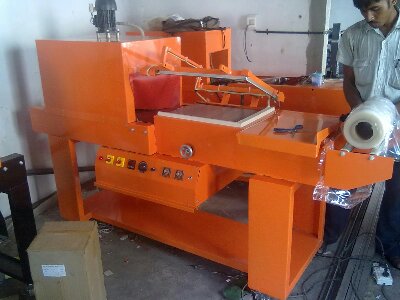 | COMBO SHRINK L-SEALER AND TUNNEL MACHINE ₹95000 Features: • Stainless steel product-loading tray • Durable silicone sealing pad • Long lasting heating element cool down function for delayed power... View product → |
 | ₹335000 The unit packs duly collated Automated & put in to In-feed Line Conveyor. The sealing shall be WEB SEALER suitable for above product. View product → |