
Export shrink packaging works only when the product, film, heat settings and load-protection method are matched. By the end, you will know the chamber operating sequence, when to use stretch wrapping instead, and which dimensions, settings and supplier details to verify before buying equipment.
Key takeaways
- Match film thickness and seal bar size to the product load.
- Keep cartons centred and clear of the chamber walls before cycling.
- Adjust temperature, dwell time and cooling for complete, tight shrinkage.
- Compare Pune suppliers on trials, service access, utilities and spare parts.
What happens during shrink chamber machine operation?
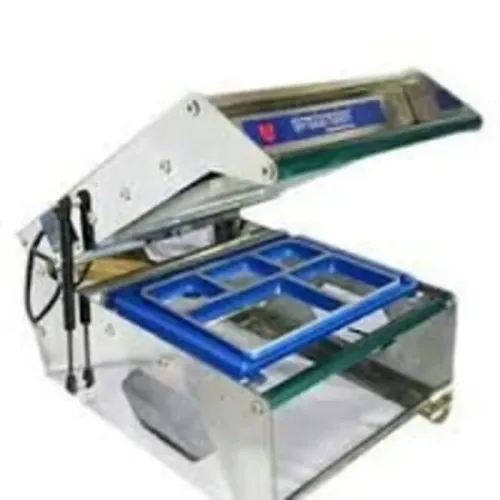
Shrink chamber machine operation packs one carton, tray, component group or small load in a controlled batch cycle. The result depends on the product, film and settings working together, not on heat alone.
1. Inspect the load. Make sure it is clean, dry and free from sharp edges, staples or exposed metal that could puncture the film.
2. Protect vulnerable surfaces before applying film. Fit corner boards, edge protectors or caps, or add an inner wrap where carton corners, rough timber or protruding parts could cut through the covering.
3. Place a pre-opened shrink bag or film sleeve around the product. Leave enough film for a continuous seal, then position the load inside the chamber without trapping any product beneath the seal bar.
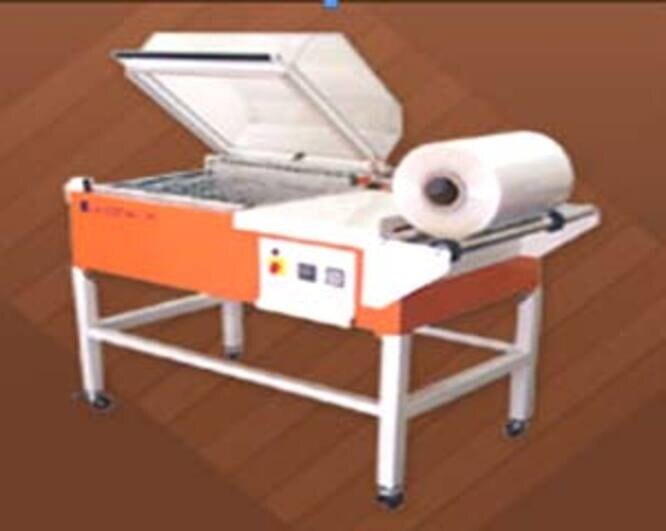
4. Close the hood. The seal bar clamps, seals and cuts the film, while heated circulating air shrinks it tightly around the load.
5. Let the programmed exposure finish, then allow the pack to cool before opening the hood and removing it. Hot film can stretch, reopen at the seal or distort during handling.
Establish three linked settings using the actual film and product: sealing temperature and dwell time, chamber temperature, and shrink time. Add handling or conveyor speed and cooling time when the machine includes powered movement.
More heat is not a universal solution. Excess heat burns seals, distorts products or makes polyolefin brittle; too little heat leaves wrinkles and loose film. Test the complete pack, including its protection and final handling, rather than testing an empty chamber.
How should you prepare an export pack before shrinking it?
Prepare the load as a supported bundle, not as a loose stack. Align cartons so lower layers carry the weight, and insert interlayer sheets where layers could shift during handling.
1. Inspect the pack for exposed metal, staples, rough timber, protruding parts and sharp crate edges. Cover them with caps, sleeves, corner boards or an inner wrap; raising chamber temperature will not fix a puncture risk.
2. Add edge protection where straps, carton corners or projecting components could cut the film. Keep the load compact enough for the hood and seal bar to clear every side.
3. Place the pre-opened shrink bag or film sleeve around the product or bundle. Leave enough film for a continuous seal without trapping the load beneath the seal bar.
4. Shrink the pack, allow it to cool, then inspect the result. Check that the film is continuous, the seal has not reopened and the pack stays stable when tilted or moved by forklift.
A chamber cover is not a pallet-containment system.
| Option | Main function | Suitable use |
|---|---|---|
| Chamber shrink wrapping | Conforms film around a prepared load | Carton, tray, single product or manageable bundle |
| Stretch wrapping | Uses film tension to stabilise a pallet | Full or tall pallet requiring load containment |
A pallet wrapping machine manufacturer should ask whether you need a close cover or pallet stability. A full export pallet often needs controlled-tension stretch film, strapping, corner boards, a top sheet or a hood-and-stretch combination.
Shrink film is not a hermetic moisture barrier. Add a sealed barrier bag, desiccant, corrosion protection or vapour-barrier system when the product and transit conditions demand it.
Which chamber, film and utility specifications fit the product?
Size a shrink chamber machine in Pune from your largest product or pack, not its average dimensions. Record maximum length, width, height and weight, then add clearance for film placement and hood closure.
Compare usable chamber dimensions with seal-bar length: the operator must close the hood without dragging film across the load or trapping a corner beneath the bar.
Specify these points in the quotation:
- Usable chamber length, width and height, seal-bar length, maximum load weight and film thickness range.
- Sealing-temperature control, dwell-time adjustment, chamber-temperature range, shrink-time control, cooling method and conveyor-speed setting, if fitted.
- Phase, voltage, frequency, installed load, heater capacity, isolator or plug arrangement, floor space, ventilation and service access.
- Guarding, emergency stops, hood interlocks, and availability of replacement heaters and thermocouples.
Film choice changes the process:
| Film | Best fit | Check before approval |
|---|---|---|
| Polyolefin | Clear retail or secondary packs with a clean presentation | Film thickness, seal behaviour and actual-pack trial |
| Polyethylene | Heavier-duty export handling where puncture resistance matters | Different shrink conditions and a looser-looking fit |
| PVC | Only after product, workplace ventilation and end-use review | Suitability, fumes and disposal requirements |
Confirm the bag or sleeve format and run the actual pack. A quoted cycle time means little unless it states pack dimensions, film thickness, loading, unloading and cooling time. Ensure the installation has adequate ventilation; trapped heat produces poor shrink and stresses heaters.
How do you prevent weak seals, holes and incomplete shrinkage?
Start with the failure symptom, not with a higher temperature. Excess heat can burn film, make polyolefin brittle or cut through the seal.
1. If the film burns, turns brittle or cuts into the pack, reduce sealing temperature or dwell time in small steps. Keep the product and loose film clear of the seal bar.
2. If the seal is weak or reopens after cooling, check for low heat, short dwell, contamination or uneven bar closure. Clean the sealing area and verify pressure, alignment and contact across the full seal-bar length.
3. If holes appear at corners, inspect for sharp carton edges, staples, metal parts and inadequate film clearance. Add corner boards, edge caps or an inner wrap; more chamber heat will not fix a mechanical puncture.
4. If wrinkles remain or shrinkage is incomplete, match chamber temperature to exposure time. Check airflow and load placement before raising heat.
5. If the product or label distorts, reduce exposure time or shrink force and confirm that the material can tolerate the heat.
Record film type and thickness, pack dimensions, seal temperature, dwell, chamber temperature, shrink time and cooling time for every trial.
Validate the final configuration as a complete shipping unit. Use ASTM D4169 distribution-cycle guidance and ASTM D3951 commercial packaging practices, then test vibration, compression, impact and environmental exposure. Inspect the pack after forklift handling and container loading. For wood pallets or crates, confirm treatment and marking under the destination implementation of ISPM 15.
How should you compare an export packaging machine supplier in Pune?
Choose the supplier whose machine proves your pack, not the one advertising an export packaging machine in Pune or the highest heater wattage. Ask every bidder to run your largest, heaviest pack using the intended film, corner protection and seal format.
| Option | What to compare | What it reveals |
|---|---|---|
| Chamber supplier | Seal integrity, hood clearance, heat distribution and film shrink behaviour | Whether the pack survives shrinking without trapped corners, holes or loose film |
| Stretch-wrapper supplier | Film tension, carriage control and pallet stability | Whether a pallet remains contained during forklift movement |
| Combined supplier | Separate trials for chamber packs and pallet loads | Whether the proposed equipment matches two different packaging jobs |
Require the trial record to state chamber size, usable product height, seal-bar length, film type and thickness, sealing temperature, dwell, chamber temperature, exposure time, cooling time, cycle time and operator method. Confirm whether loading and unloading are manual, whether output includes cooling, and how the machine handles a failed cycle.
Review guarding, hood interlocks, emergency stops, electrical supply, phase, frequency, installed load, spare heaters, thermocouples and local response time. A pallet wrapping machine manufacturer that also supplies chamber equipment must explain why stretch film contains a pallet while chamber film mainly conforms around a prepared pack.
For a Pune shortlist, ASN Packaging PVT LTD belongs in the comparison only if its trial proves the required result and installation fit. Put these items into the purchase specification:
- Approved film and settings
- Acceptance checks
- Maintenance responsibilities
- Failed-cycle procedure
Frequently asked questions
What happens during shrink chamber machine operation?
The operator places a film-wrapped product inside the chamber, closes the hood or door, seals and cuts the film, then applies controlled heat. Cooling completes the shrink cycle before the pack is removed.
How should you prepare an export pack before shrinking it?
Use a stable carton, remove sharp edges or protect them with corner guards, centre the load, select suitable shrink film and leave clearance around the seal area and chamber walls.
Which chamber, film and utility specifications fit the product?
Check product length, width, height, weight, production rate and pack shape against chamber dimensions, seal-bar size, film width and thickness, electrical load, compressed-air needs and available floor space.
How do you prevent weak seals, holes and incomplete shrinkage?
Clean the seal bar, keep film tension consistent, protect sharp corners, set the sealing temperature and dwell time correctly, and increase heat exposure only after checking film choice and loading.
How should you compare an export packaging machine supplier in Pune?
Request a product trial, a written utility schedule, installation details, operator training, response times, spare-parts availability and service coverage. Compare suppliers on the finished pack, not only machine price.