
A double-chamber vacuum machine earns its place when it keeps operators loading one chamber while the other evacuates and seals, but its value depends on finished packs per hour rather than pump size alone. You will be able to compare machine types, test whether the investment fits your production, calculate total cost, and specify an acceptance trial that exposes weak seals, slow handling, and unsuitable product conditions.
Key takeaways
- Measure packs per hour, including loading, sealing, cooling and unloading.
- Choose chamber size and vacuum settings around your product and bag dimensions.
- Compare seal failures, labour time, maintenance and energy—not purchase price alone.
- Run filled-product trials before selecting a vacuum machine supplier in Pune.
How a Double-Chamber Machine Converts Operator Time into Sealed Packs
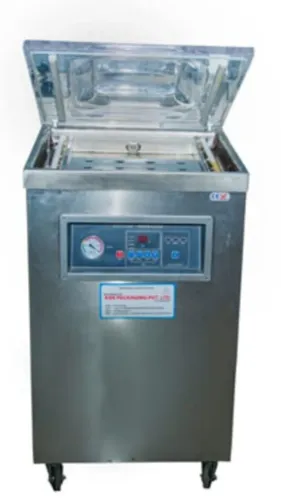
A double-chamber vacuum machine turns packing into an alternating cycle. The operator loads freshly filled bags into one chamber while the other chamber evacuates air, seals the bag, cools the seal, vents, and releases the finished pack.
Once the first chamber opens, the operator swaps the bags and starts its cycle while the second chamber works.
That overlap reduces idle time and keeps labour focused on loading and unloading rather than waiting for a pump. It does not automatically double output: evacuation time, seal dwell, bag size, product temperature, loading speed, and the filler’s discharge rate still set the limit.
| Option | Operating pattern | Practical fit |
|---|---|---|
| Double-chamber vacuum machine | Load one chamber while the other evacuates and seals | Repeated medium-to-high batches, large bags, liquids, and semi-liquids |
| Single-chamber machine | Load, evacuate, seal, and unload in the same chamber | Intermittent production and smaller batch volumes |
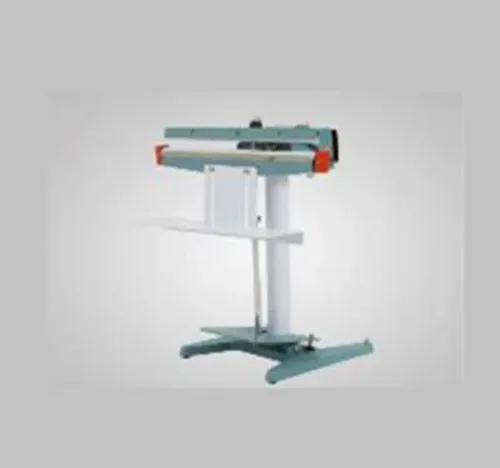
| External-nozzle sealer | Pull air through a nozzle inserted into the bag | Dry products, small bags, and simple manual packing |
| Tray sealer | Seals a film lid over a rigid tray, with optional vacuum or gas flush | Portion-controlled products needing presentation |
| Modified-atmosphere system | Removes air and replaces it with a controlled gas mixture | Products requiring a specified gas atmosphere rather than simple vacuum |
The core double chamber vacuum machine benefits appear when the filler can discharge at a steady rate. Specify bag presentation, vacuum setpoint, gas flush, seal temperature, dwell, cooling, discharge, and fault interlocks as one sequence. For liquid products, control vacuum carefully; excessive suction can pull liquid into the seal and cause leaks.
Match the Packaging Method to the Product and Production Pattern
Choose a double-chamber machine when you run repeated medium-to-high batches, handle large bags or liquid products, and have operators ready to load and unload continuously. Its value comes from utilisation: one chamber can be loaded while the other evacuates and seals. It will not overcome a slow filler, poor bag presentation or long seal dwell.
| Option | Best fit | Limitation |
|---|---|---|
| Double-chamber vacuum machine | Batch production, large bags, liquids and semi-liquids, multiple operators | Needs floor space, bag handling and correct cycle settings |
| Single-chamber machine | Intermittent production, small batches and lower daily pack counts | The operator waits for evacuation, sealing and venting before loading again |
| External-nozzle sealer | Dry products, small bags and occasional packing | Liquid can reach the nozzle or seal area; bag handling remains manual |
| Tray sealer | Rigid trays, retail presentation and controlled top-film sealing | Does not suit freely shaped large bags |
| Modified-atmosphere system | Products needing a specified gas mix rather than simple air removal | Requires gas supply, dosing control and residual-oxygen verification |
For a vacuum packing machine for manufacturers, compare sealed bags per hour at the required vacuum and seal quality, not pump displacement alone. Excessive vacuum can pull liquid into the seal; insufficient settling leaves trapped air and weak seals.
Choose the simpler option when packing is intermittent or the filler is the bottleneck. For moist or ready-to-eat foods, validate refrigeration, sanitation, HACCP controls and shelf life; vacuum packaging does not replace them.
Test Whether Double-Chamber Vacuum Packing Is Worth the Investment
Ask the blunt question: is double chamber vacuum packing worth it? The answer depends on utilisation, labour saved and saleable packs, not pump displacement. Count sealed bags per hour at the required vacuum and seal quality; a slow weigh filler or manual bag presentation can leave an expensive machine idle.
| Operating condition | Payback signal | Better decision |
|---|---|---|
| Repeated medium-to-high batches | Two operators keep both chambers supplied and reduce waiting | Double-chamber machine |
| Intermittent production or small bags | Low daily pack count leaves capacity unused | Single-chamber or external-nozzle sealer |
| Large bags, liquids or semi-liquids | Chamber processing reduces nozzle handling and spill risk | Double-chamber machine, with tested cycle settings |
| Filler-limited output | The filler cannot supply bags at the sealer’s rate | Improve filling first |
| Shelf-life target without validated data | Vacuum level alone does not prove longer life | Test residual oxygen on the actual product and bag |
Calculate payback from extra saleable packs, labour redeployed, rejected seals, product loss and downtime avoided. Include changeover and cleaning time; a machine that saves 30 minutes per batch but adds an hour of sanitation has not saved labour.
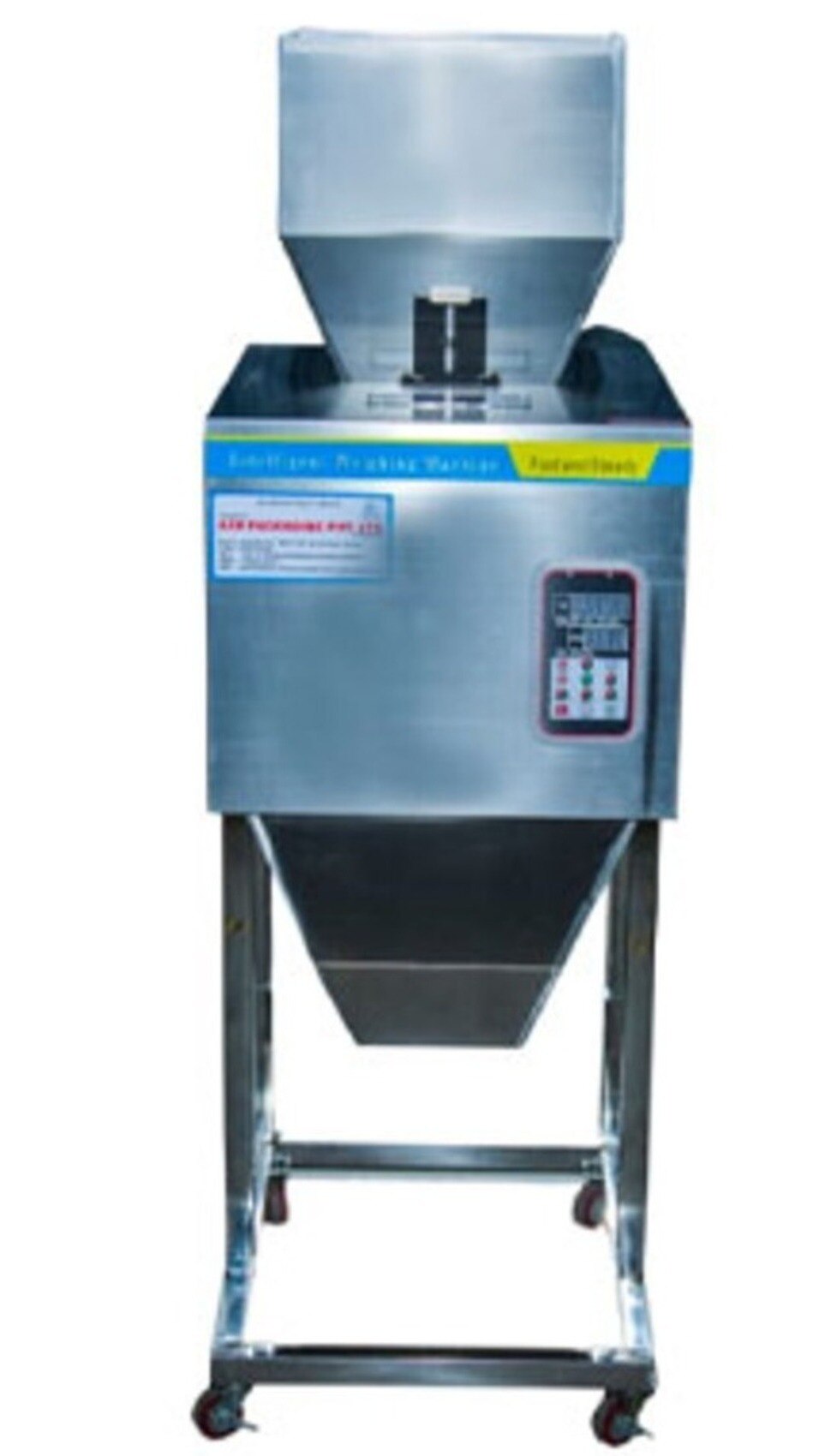
For the weigh filler machine manufacturer double chamber vacuum machine for value in Pune decision, run the actual fill weight, bag, product temperature and cycle rate. Record packs per hour, residual oxygen, seal strength, leakage and electrical load.
Moist ready-to-eat products still require refrigeration, sanitation, shelf-life validation and HACCP controls; vacuum packing does not remove Clostridium botulinum or Listeria risks.
Calculate Value with Throughput, Pack Integrity, and Total Cost
Compare the purchase price with the cost per saleable pack, not the pump’s quoted displacement. Calculate this using sealed bags per hour at the required vacuum, then include electricity, pump oil, seal-bar replacement, labour, rejects, maintenance and downtime.
| Specification | Compare | Why it changes value |
|---|---|---|
| Pump capacity | Evacuation time at your bag size versus quoted displacement | A larger pump has little value if loading or sealing remains the bottleneck |
| Seal system | Temperature, pressure, dwell time and cooling control | Incorrect settings create weak seals, leaks and rejected packs |
| Filler interface | Manual transfer versus linked discharge, interlock and fault stop | Manual handling can erase weighing and throughput gains |
| Chamber size | Your largest filled bag versus the usable chamber area | An oversized bag can slow loading, flatten product or prevent proper sealing |
Test the complete sequence with your product: filler discharge, bag presentation, evacuation, optional gas flush, sealing, cooling and discharge. Record cycle time across a representative batch, then divide good packs by total operating hours, including loading, unloading and stoppages.
Treat the seal as the main integrity cost. Control wrinkles, contamination, bag thickness, seal-bar condition and product temperature; challenge results with ASTM F88/F88M seal-strength testing and ASTM F2096 or ASTM D3078 leak testing. A vacuum reading alone does not prove a sound pack.
For a vacuum packing machine for manufacturers, verify that finished packs carry the declared net quantity, batch or lot identification and manufacturer or packer details required by India’s Legal Metrology (Packaged Commodities) Rules. The machine cannot repair an underweight fill or missing label.
Run a Product Trial Before Choosing a Pune Supplier
Accept the machine only after it runs your actual bag, fill weight, product temperature and target cycle rate. Record sealed bags per hour, vacuum setpoint or residual oxygen, seal strength, leakage rate, product loss near the seal or pump, electrical load and changeover time.
A quoted pump displacement or catalogue cycle time does not prove finished-pack output.
Ask a vacuum machine supplier in Pune to demonstrate the complete interface with your weigh filler:
- Filler discharge into the bag without spillage or missed fills.
- Bag presentation, chamber loading, vacuum, gas flush if required, sealing temperature, dwell, cooling and discharge.
- Interlocks that stop the cycle when the lid, filler or seal circuit is unsafe.
- Accuracy checks against declared net quantity, plus space for batch or lot identification and packer details required under India’s Legal Metrology (Packaged Commodities) Rules.
- Oil condition checks, filtration, seal replacement and cleaning after powder or product vapour enters the pump area.
- Local access to pump oil, seals, heating elements, sensors and trained technicians.
Compare the supplier’s promise with observed results:
| Measure | Supplier claim | Acceptance evidence |
|---|---|---|
| Throughput | Cycle time | Sealed bags per hour at your fill weight |
| Vacuum | Setpoint or time | Residual oxygen or vacuum reading |
| Seal quality | Seal width and dwell | Strength test and leak test |
| Operation | Rated power | Recorded load and changeover time |
ASN Packaging PVT LTD can be evaluated on this same evidence: require a witnessed trial and a maintenance demonstration, not a model name alone.
Frequently asked questions
What are the main benefits of a double-chamber vacuum machine?
It lets an operator load one chamber while the other evacuates air, seals, cools and vents. That alternating cycle reduces idle operator time and supports repeatable pack handling.
When is double-chamber vacuum packing worth the investment?
It is worth testing when manual packing creates a production bottleneck, vacuum-pack integrity matters, and the expected throughput justifies the machine, labour, maintenance and energy costs.
How do you match a double-chamber machine to the product?
Check the product’s shape, moisture, fill weight, bag dimensions and required vacuum level. Confirm that the chamber fits the largest loaded bag without obstructing the seal bar or causing product damage.
What should you measure during a product trial?
Record complete cycle time, packs per hour, seal width and consistency, residual air, leakage after handling, operator loading time and any product deformation.
How do you compare vacuum machine suppliers in Pune?
Ask suppliers to run your actual product and bags, document the machine configuration and cycle results, explain maintenance access and spare parts, and provide clear commissioning and operator-training terms.