
A loose bundle can result from low applied tension, strap relaxation, package compression, slipping feed parts, a weak weld, or a failing battery. You will be able to isolate those causes, correct safe operator-level faults, and give a Pune service technician the evidence needed for an effective repair.
Key takeaways
- Check retained tension after a defined hold period, not only immediately after strapping.
- Inspect strap quality, package compression, routing, and technique before replacing machine parts.
- Test battery voltage under load to separate battery weakness from electrical or mechanical faults.
- Replace worn tension parts when adjustment cannot restore tension or consistent seals.
Start with the symptom: loose strap, no tension, failed seal, or strap break
A loose strap does not prove a tensioner fault. First separate insufficient applied tension from loss of retained tension: check the strap immediately after the cycle, then again after a defined hold period. Carton compression, battery-pack settling, or PP/PET strap relaxation can release tension after a good cycle.
- Record the symptom and cycle point before changing settings: loose strap at application, no tension at the tension wheel, failed weld, strap break, or shutdown during tensioning.
- Record strap material, width, thickness, joint type, package length and width, target tension, battery state of charge, and the exact point of failure.
- Inspect the strap path for an obstruction, incorrect threading, slipping feed or tension wheels, damaged guides, and worn gripper teeth. Confirm that the strap width and thickness match the tool.
- Test battery seating, electrical contacts, charger output, and voltage under load. A voltage drop during tensioning points toward the battery or contacts; normal loaded voltage with slow tensioning points toward motor wear, drive-wheel slip, or a control-board fault.
- Inspect the overlap and seal before blaming heat. A short overlap, contaminated strap, misaligned jaws, or a worn sealing surface creates a weak joint; a cut-through joint indicates excessive heat, pressure, or dwell.
- Run a loaded test with the customer’s normal strap and a representative package, then measure weld strength and retained tension. A bench test without strap cannot validate the repair.
For loose strap troubleshooting machine work, provide the battery, charger, strap roll, and failed joints or photographs. If arranging packaging machine for company battery strapping troubleshooting in Pune, give the technician these records before parts are replaced.
Check the strap, package, routing, and operating technique
A bundle that feels tight at the tool but loosens after an hour has a retention problem, not necessarily a tensioner fault. For loose strap troubleshooting, machine checks should compare tension immediately after sealing with tension after a defined hold period.
- Match the strap to the tool and load. Confirm PP or PET material, width, and thickness against the machine specification. An incorrect size can slip at the tension wheel, fail to grip, or prevent the seal from forming across the full overlap.
- Inspect the package geometry. Gaps between cartons, rounded loads, uneven surfaces, and unsupported layers let the bundle shift after strapping. Corrugated board, foam, and plastic containers also compress or relax, reducing retained tension without any machine failure.
- Do not keep raising the tension setting. Excessive force can crush cartons, deform containers, cut product edges, buckle the load, or rupture the strap while the weld remains sound. Add corner protectors, remove voids, or select a stronger strap grade when the package needs restraint rather than force.
- Check the complete strap path for twists, dirt, obstructions, worn tension-wheel surfaces, and slipping gripper teeth. Feed the strap straight around the load, keep it centred, and confirm that the free end is correctly routed before starting the cycle.
- Watch the operator’s timing and hand position. Pulling the strap sideways, releasing it before the tool finishes, or strapping over a moving or poorly aligned load creates an unstable bundle. Re-test with the normal strap and a representative package, then record applied and retained tension.
Separate a weak battery from worn tension parts or an electrical fault
A tool that starts normally but stops during tensioning is often hitting its electronic low-voltage cutoff, not suffering from a failed motor. Test it on the actual package, because a no-load motor test can pass while the drive wheel slips under load.
| Cause | Check | Clue |
|---|---|---|
| Battery | Confirm charge completion, correct voltage and chemistry, firm seating, clean contacts, age, and voltage while tensioning | Voltage collapses under load; the tool recovers after a charged battery is fitted |
| Charger | Test the charger and observe whether its completion indicator changes correctly | The battery remains weak after a full charging period |
| Motor | Listen for grinding, inspect overheating, and compare loaded performance with a known-good battery | Correct voltage reaches the tool, but the motor stalls or runs slowly |
| PCB or wiring | Inspect connectors and measure voltage at the motor during the cycle | Sudden shutdown, error indication, or intermittent operation remains with a good battery |
| Mechanical wear | Inspect the tension wheel, drive roller, gripper teeth, strap guides, and obstruction points | The motor runs, but the strap slips or tension stays low on every loaded cycle |
For battery operated strapping machine problems in Pune, record strap material, width, thickness, joint type, package dimensions, target tension, battery state of charge, and the exact failure point. These details prevent guesswork.
Arrange battery operated strapping machine service with the tool, battery, charger, actual strap roll, and failed joints or photographs. Require a loaded test using your normal package, followed by retained-tension and weld-strength checks. Replacing only the battery does not fix repeatable wheel wear, alignment, or PCB faults.
Diagnose weak welds, cut-through seals, and straps that snap
A seal failure is a map of what happened at the joint. Inspect both the weld and the strap beside it before changing tension or heat settings.
- A clean break through the weld indicates poor fusion. Dirt, oil, dust, moisture, insufficient heat, short weld time, or inadequate strap overlap can cause it.
- A break immediately beside the weld indicates heat damage or excessive tension. A cut-through seal means the jaws are overheating, clamping too hard, or staying closed too long.
- A longitudinal split or edge tear points to strap damage, a sharp guide, misalignment, or tension that exceeds the strap grade.
- An uneven, shallow, or partly unwelded joint indicates worn or misaligned jaws. Replace or align the weld assembly when the defect repeats on clean, correctly overlapped strap.
For loose strap troubleshooting machine work, check whether the strap lost tension after sealing or never reached the target. Inspect the package for compression and relaxation before replacing tension parts.
Arrange battery strapping machine repair in Pune with the actual strap roll, charger, battery, representative package, and failed joints or photographs. The technician should record strap material, width, thickness, joint type, package dimensions, target tension, battery state of charge, and failure point.
Accept only a loaded test using your normal strap and package, followed by weld-strength and retained-tension checks; a strapless bench test or different material does not validate the repair.
Choose repair, maintenance, or a different machine for your workload
Stop operating immediately if the battery housing is swollen, hot, cracked, or sparking; the charger smells burnt; the tool cuts through strap repeatedly; or a sealed joint opens under light handling. Quarantine the bundle and do not compensate by increasing tension.
Request battery operated strapping machine service in Pune when the fault repeats with the correct strap, a charged battery, and a sound package. Send the tool with its battery, charger, actual strap roll, and failed joints or photographs.
Record strap material, width, thickness, joint type, package size, target tension, battery charge, and the exact failure point.
- Ask for battery and charger testing, contact inspection, strap-path and guide checks, drive-wheel wear measurement, weld-jaw alignment, setting verification, and a loaded test.
- Reject a repair validated only on a bench or with a different strap. The technician must test your normal strap on a representative package, then check weld strength and retained tension after a defined hold period.
- Replace the portable tool when volume, cycle time, or consistent tension exceeds what operators can achieve safely. Choose pneumatic equipment for a stable compressed-air supply and repeated heavy-duty work; choose semi-automatic equipment for regular pallet or carton throughput; choose fully automatic equipment when strapping must integrate with a conveyor or production line.
| Option | What it means | When it applies |
|---|---|---|
| Repair | Restore the existing tool and verify loaded performance | An isolated electrical, mechanical, or weld fault |
| Maintenance | Correct wear, settings, routing, or battery condition | Performance declines without a single failed component |
| Different machine | Move beyond portable operation | Labour, speed, or repeatability is limiting output |
For battery operated strapping machine problems in Pune, ASN Packaging PVT LTD can help compare the failed loaded cycle with a more suitable machine format. Use battery strapping machine repair in Pune only after confirming the package and strap are not causing retained-tension loss.
Related product
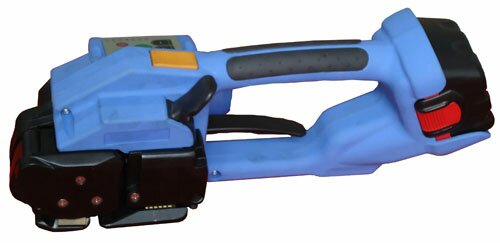 | BATTERY OPERATED STRAPPING MACHINE ₹122000 1) Model No: ZP 22 6 B. for PP & PET Strap: With Brushless motor technology. for *Size: 12 mm & 16 mm. Thickness: up to 1 mm. Max Tension : 2500N. View product → |
Frequently asked questions
What should you check first when a battery strapping machine leaves a loose strap?
Check the strap immediately after the cycle and again after a defined hold period. Then inspect strap type, package compression, routing, and operating technique before blaming the tensioner.
How can you tell a weak battery from worn tension parts?
Test battery voltage under load and observe motor speed during tensioning. A voltage drop points to the battery or electrical circuit; normal voltage with slipping or inconsistent tension points to worn tension parts.
Why do battery strapping machine welds fail or cut through the strap?
Check weld temperature, pressure, alignment, contamination, and strap compatibility. Excessive heat or pressure can cut through the strap, while insufficient heat or poor alignment produces a weak weld.
When should you repair a battery operated strapping machine or choose another machine?
Repair it when battery, wiring, tension components, or sealing parts are serviceable and the workload fits the machine. Choose a different machine when cycle volume, strap width, package size, or required tension exceeds its working range.