
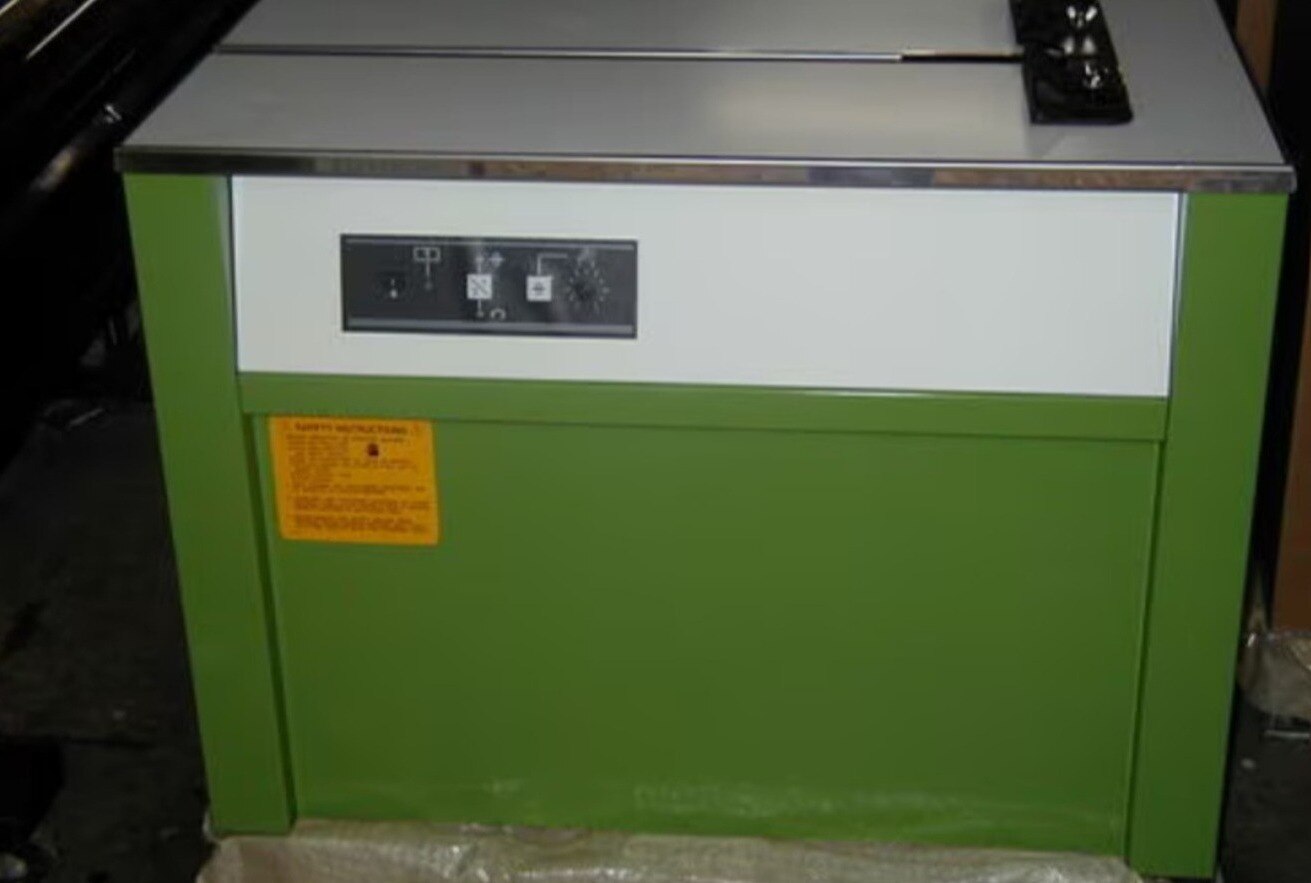
A strapping machine that stops, loses tension, jams, or produces weak joints needs a controlled recovery process rather than immediate parts replacement. You will be able to define the failure, prepare the machine safely, judge repair options, set a maintenance routine, and verify production readiness with a Pune-based supplier.
Key takeaways
- Isolate power and stored strap tension before opening the machine.
- Reproduce the fault before ordering parts or approving repairs.
- Record seal quality, strap tension, cycle time and rejected packs.
- Require a documented test run before returning the machine to production.
What “Recovery” Means Before a Technician Arrives
“Recovery” means returning a heavy duty strapping machine to a controlled, repeatable production state. It can cover an emergency breakdown, restoration after a long shutdown, recommissioning after relocation, or correction of a recurring fault. It does not mean replacing parts before anyone has reproduced the failure.
When you contact a packaging machine supplier for recovery in Pune, include:
- Make, model, serial number, installation location, and date of the last successful run
- Strap material, width, thickness, target tension, package dimensions, and joining method
- Exact symptom, fault code, cycle position, frequency, and whether the fault is repeatable
- A short video showing the complete failed cycle, including feeding, tensioning, joining, cutting, and restart
- Recent changes, such as new strap stock, settings, electrical work, relocation, cleaning, or a long idle period
- The production impact: no start, jam, loose strap, broken strap, weak seal or weld, incomplete cut, or intermittent stoppage
| Failure type | What you are trying to resolve | Useful evidence |
|---|---|---|
| Strap or specification mismatch | The machine cannot handle the selected strap or package | Width, thickness, material, roll condition |
| Mechanical or pneumatic fault | Jam, slipping, abnormal noise, or inconsistent tension | Location, air pressure, timing, visible wear |
| Electrical or control fault | No-start condition, sensor fault, or unexplained stop | Fault code, indicator state, restart behavior |
| Joining-head fault | Weak weld, failed seal, overheating, or cutter failure | Joining method, temperature or cycle settings, joint appearance |
A clear request identifies the failure class and asks for diagnosis, not a guessed replacement part.
The Safe Recovery Workflow from Isolation to Inspection
A technician should not begin by ordering parts. Record the make, model, serial number, strap material, width, thickness, target tension, joining method, fault code, and a short failure video, then reproduce the fault under controlled conditions.
1. Stop the machine, isolate the electrical supply, close and lock the pneumatic supply, and release or restrain stored pressure, spring force, suspended loads, and heated-head energy. Apply lockout/tagout, verify zero voltage and zero air pressure, and test the start control before removing guards.
2. Photograph the machine’s settings and back up the parameter file. Mark cable, hose, and sensor connections before disconnecting them; an undocumented change can create a second fault during recovery.
3. Trace the complete strap path from coil or dispenser through guides, feed rollers, tensioning wheels, grippers, cutter, and sealing head. Remove strap fragments and PET or PP dust, then check for bent guides, worn rollers, blocked sensors, loose fasteners, and abnormal tracking.
4. Examine the tension unit for worn friction wheels, slipping grippers, damaged bearings, and incorrect alignment. Inspect the heater or friction-welding interface for contamination, wear, temperature damage, and poor contact; keep friction surfaces, guides, grippers, and welding areas dry unless the manufacturer specifies lubrication.
5. Check emergency stops, guard interlocks, limit switches, wiring, fuses, sensors, and pneumatic valves before condemning a motor or control board. Record measurements and symptoms.
A heavy duty strapping machine recovery service in Pune should issue an inspection report separating confirmed failures from suspected causes. Replace parts only after that evidence identifies the failed component.
Diagnosing Weak Seals, Jams, Loose Straps and No-Start Faults
A strap-supply fault follows the material from coil to machine: the strap is twisted, damaged at the edge, wrong in width or thickness, or unwinds with excessive resistance. Confirm this by fitting the specified strap, checking the reel brake and pay-off path, and observing whether the jam moves with the coil.
Wrong strap material also causes failure: steel with metal seals, PET with friction welding, and PP or PET with heat sealing require different heads and settings.
Isolate electrical, pneumatic and mechanical energy before removing guards. Then record the fault code, target tension and failure position. Use the following separation tests:
- Mechanical fault: strap reaches the tensioning unit but slips, back-feeds or breaks. Inspect the tension wheel or belt, guides, gripper faces, cutter, bearings and bushings for wear or misalignment.
- Joining-head fault: tension is correct but the seal or weld is incomplete. Check heater temperature and dwell time for heat sealing, or pressure, friction and gripper condition for friction welding; inspect metal-seal closure on steel-strap machines.
- Electrical fault: the motor, heater or valve has no output despite a start command. Test supply voltage, fuses, contactors, overloads and pneumatic pressure.
- Control or safety fault: the machine will not start, or stops at the same sequence point. Check the emergency-stop circuit, guard interlocks, strap sensors, limit switches, PLC inputs and stored fault code.
A repair request for heavy duty strapping machine repair in pune should include a short failure video, make, model, serial number, strap specification and joining method. After repair, test repeated loaded cycles, not one empty cycle.
Repair, Rebuild or Replacement: The Decision and Maintenance Evidence
Repair the failed component when the fault is localized and the machine frame, controls, tensioning assembly, and safety devices remain sound. Replace worn parts such as a tensioning wheel, strap guide, gripper, cutter, bearing, or welding head, then verify alignment and calibration.
| Option | Decision | Evidence required |
|---|---|---|
| Repair | One failed or worn component causes the fault | Failure diagnosis, replaced-part record, alignment check, and successful production cycles |
| Rebuild | Several wear points or repeated failures affect one machine | Inspection of the tensioning unit, guides, joining head, cutter, bearings, wiring, sensors, and controls; documented parts and settings |
| Replace | Structural damage, obsolete controls, unavailable critical parts, or unsafe operation makes restoration unreliable | Comparison of repair risk, downtime, spare-parts support, capacity, and a tested replacement |
A rebuild is not complete when parts are fitted. Require electrical, pneumatic, and mechanical safety-device tests, parameter backup, test cycles using your actual strap and package, and a return-to-service report covering feed, tension, joining, cutting, tracking, emergency stop, guard interlocks, and restart.
Prevent recurrence through heavy duty strapping machine maintenance that records inspection dates, symptoms, measurements, adjustments, and replaced parts. Keep friction wheels, grippers, strap guides, and the welding interface clean and dry; lubricate only the parts identified by the machine manual. Oil on traction or joining surfaces causes slippage and weak seals.
Inspect the tensioning belt or wheel, guides, grippers, cutter, joining head, bearings, and bushings before wear becomes a breakdown. Schedule preventive maintenance separately from corrective repair, recovery after a long shutdown, and recommissioning after relocation.
Choosing a Pune Supplier and Proving the Machine Is Production-Ready
Require a written scope before approving a strapping machine recovery service in Pune. It must state whether the visit covers diagnosis, corrective repair, recommissioning after shutdown, preventive maintenance, workshop repair, removal and refitting, alignment, parameter backup, replacement parts, safety-device testing, production load testing, operator handover, and a return-to-service report.
| Service level | Supplier must include | Evidence you receive |
|---|---|---|
| Corrective repair | Fault reproduction, root-cause diagnosis, worn-part replacement and adjustment | Failed-part record and test result |
| Recommissioning | Strap-path inspection, calibration, parameter restoration and safety checks | Signed commissioning sheet |
| Preventive maintenance | Cleaning, specified lubrication, tension and joining-head inspection | Maintenance schedule and parts condition |
Give the supplier your make, model, serial number, strap material, width, thickness, target tension, joining method, fault code and failure video. Confirm compatibility with the actual PET or PP strap; check that the guides, friction wheels, grippers, cutter and sealing or friction-welding head suit its dimensions.
Keep friction surfaces and welding interfaces dry unless the manual names a lubricant.
After heavy duty strapping machine repair in Pune, acceptance must use your actual strap, package geometry and production settings. Require repeated feed, tension, seal or weld formation, cutting, strap tracking, emergency-stop operation, guard-interlock operation and restart behavior. One unloaded cycle proves little.
Record cycle results, measured tension, adjustments, replaced part numbers, safety-test outcomes, outstanding defects, operator training and the authorised release date. ASN Packaging PVT LTD can be assessed against this same evidence rather than a verbal “repaired” declaration.
Frequently asked questions
What does heavy-duty strapping machine recovery include?
Recovery returns the machine to a controlled, repeatable production state after a breakdown, shutdown, relocation or recurring fault. It starts with fault reproduction and inspection, not automatic parts replacement.
How do you safely recover a strapping machine?
Isolate electrical power, release stored pneumatic and mechanical energy, secure the strap path, and inspect the machine before testing individual functions under controlled conditions.
What causes weak seals, jams, loose straps and no-start faults?
Weak seals can result from incorrect heat, pressure or strap alignment. Jams often involve misthreading, debris or worn guides. Loose straps indicate tension or feed problems, while no-start faults require checks of safety interlocks, sensors, controls and power supply.
When should you repair, rebuild or replace a strapping machine?
Repair an isolated component fault, rebuild when wear affects several related assemblies, and compare replacement when the frame, controls or critical mechanisms are unreliable or uneconomical to restore. Keep maintenance and test evidence for the decision.