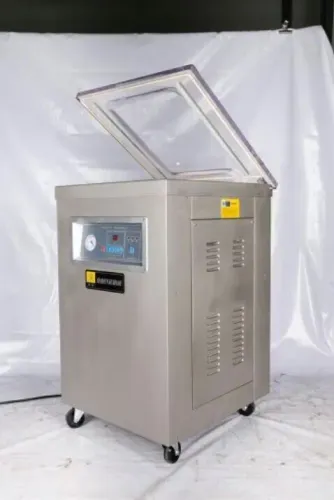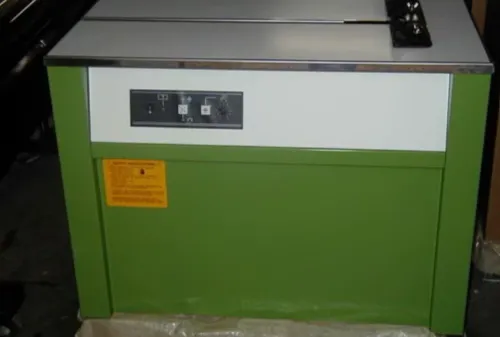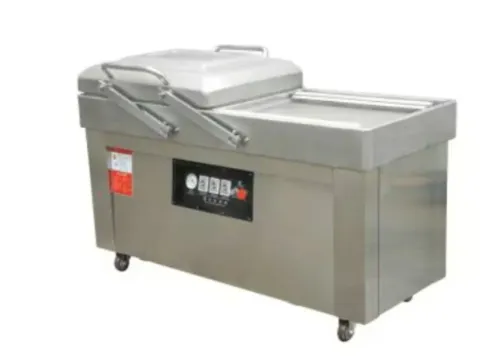

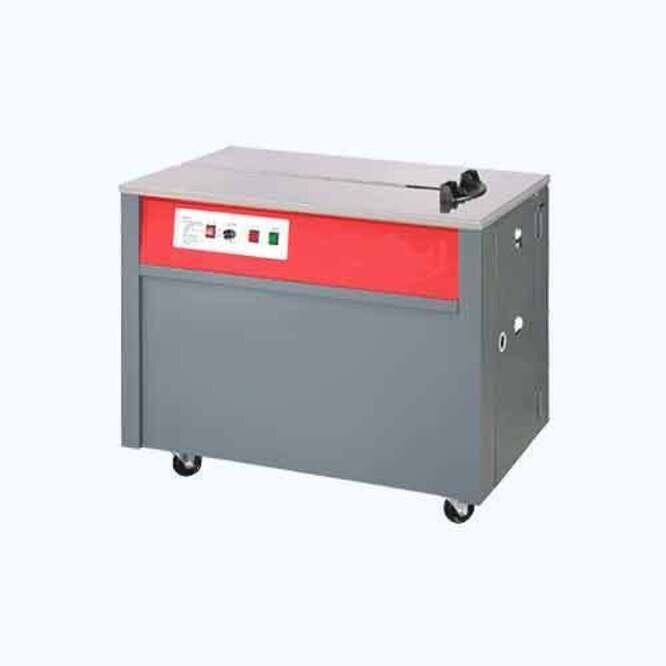
A heavy export carton can leave the packing station with a tight-looking strap and still fail because the load was unstable, the tension crushed the board, or the joint was weak. By following the preparation, strapping, inspection and acceptance steps below, you can set up a repeatable process and specify a machine that actually fits your cartons and production line.
Key takeaways
- Square and close the carton before starting the strap cycle.
- Match strap width, tension and corner protection to the export load.
- Use semi-automatic equipment for variable volumes and in-line systems for steady flow.
- Test joint strength and inspect every failed strap before shipment.
Run the carton through the complete strap cycle
Square the export carton before strapping. Close major gaps, secure loose flaps, and add a top sheet, bottom sheet, or corner protectors where the load is uneven; a strap retains a stable load but cannot repair a failing carton closure.
- Place the carton centrally on the table or conveyor, with its strap line aligned to the machine arch or guide.
- Check that the strap coil unwinds in the marked direction. Thread the strap through the guide, tensioner, sealing head, and cutter without twists, and leave enough tail for the machine clamp.
- On a semi-automatic machine, pass the strap around the carton and insert the tail into the slot. On an automatic line, confirm that the conveyor has squared and positioned the carton.
- Set tension within the approved range for the strap width, thickness, and carton strength. Excess tension crushes edges; insufficient tension leaves the load loose.
- Press the cycle button or use the conveyor trigger. The machine feeds or draws the strap tight around the carton.
- Let the head complete its specified heat-seal or friction-weld operation, then cut the strap. Do not remove the carton during sealing.
- Check that the strap lies flat, the joint is fully formed, and the carton has not buckled before removing it.
This heavy duty strapping machine process in Pune is complete only after inspection. The same strapping machine operation for exporters prevents stoppages when you verify the strap path, weld or seal, tension retention, and carton release on every cycle.
Match strap, tension and protection to the export load
Set tension from the carton’s compression strength and the load’s stability, not from the machine’s maximum setting. Excess tension crushes board edges, pulls the strap into the carton and can damage the product; insufficient tension lets the strap slacken during vibration.
An industrial strapping machine for export cartons must match tension to strap width, thickness and corner protection.
| Strap | Best fit | Main caution |
|---|---|---|
| PP | Light cartons and low-cost applications | Lower retained tension for heavy or shock-loaded exports |
| PET | Heavier loads needing retained tension and shock resistance | Confirm the carton can withstand the selected tension |
| Steel | Very high-tension or severe-impact loads | Use edge protection; exposed edges can cut corrugated board |
Square the cartons and close major gaps before strapping. A strap cannot stabilise a leaning pallet pattern or repair a failing carton closure. Use heavy duty carton strapping equipment with tension limits that operators can set and lock for each carton format.
Add protection where pressure concentrates:
- Place corner protectors under every strap crossing a vulnerable carton edge.
- Add a top sheet when the strap would otherwise press directly into flaps or product.
- Add a bottom sheet when pallet boards or fork handling could cut the lower carton.
- Support uneven loads before the cycle; do not compensate with extra tension.
Set the seal or weld parameters for the actual strap grade. A weak joint causes loosening; an overheated joint weakens the strap near the seal. Run a trial under packed-load conditions and inspect the carton after tensioning for crushed corners, strap indentation and movement.
Choose between semi-automatic and in-line strapping
Choose a semi-automatic machine when carton volume is moderate, package sizes change frequently, or an operator already handles pallet building and positioning. It suits exporters who need controlled investment, compact floor space and flexible changeovers rather than continuous, unattended flow.
| Decision factor | Semi-automatic machine | Fully automatic in-line line |
|---|---|---|
| Carton handling | Operator squares and positions each carton | Conveyors square, space and position cartons |
| Production pattern | Variable batches and mixed dimensions | Stable, repetitive carton flow |
| Labour | Requires an operator at the machine | Reduces manual strapping work |
| Throughput basis | Limited by operator loading and removal | Limited by conveyor, feeder and downstream flow |
| Best fit | Low-to-medium or changing demand | High, consistent volume with line integration |
Do not select an automatic line from its quoted cycle rate alone. The real rate falls when cartons arrive unevenly, require manual correction, or wait for conveyor spacing.
For strapping machine operation for exporters, choose semi-automatic equipment when one operator can keep the machine supplied without creating a packing queue. Choose an in-line system when upstream carton forming and downstream pallet movement already provide a steady stream, and labour reduction justifies conveyor controls, guarding, integration and maintenance.
An industrial strapping machine for export cartons also needs space for safe access, coil replacement and fault clearing. A semi-automatic machine is the wrong choice when operators cannot maintain positioning speed or when missed straps interrupt a high-volume dispatch line.
Confirm machine fitment before you buy or install
A machine that reaches its advertised tension can still be wrong for your export carton. Test it with the actual carton, strap, pallet pattern and protective materials before approving an industrial packaging machine for heavy duty strapping process in pune.
Prepare the trial load with squared cartons, closed gaps, controlled flaps, and top sheets, bottom sheets or corner protectors where the stack needs support. Strapping cannot stabilise a leaning pallet or repair a failing carton closure.
Ask the supplier to confirm these machine and package limits:
- Strap material, width and thickness range; coil core, outer diameter and maximum coil weight.
- Minimum and maximum carton length, width and height; arch or head clearance; conveyor width and package weight limit.
- Tension-control range, sealing method, weld or crimp settings, and the joint-strength test used for acceptance.
- Infeed speed, squaring and positioning method, emergency-stop locations, wear-part availability and Pune service coverage.
- Whether the strap will cover shipping, handling or phytosanitary marks. ISPM 15 applies to wooden pallets, crates, dunnage and skids, not corrugated cartons or plastic strap.
Machine choice changes the fitment risk:
| Option | Verify before purchase | Reject or revise when |
|---|---|---|
| Semi-automatic | Operator loading space, table height, carton access and manual alignment | Carton positioning varies or labour cannot maintain the planned rate |
| In-line | Conveyor height, package spacing, squaring, arch clearance and controls integration | Quoted cycle rate exceeds achievable packed-carton throughput |
For heavy duty carton strapping equipment, ASN Packaging PVT LTD can record carton dimensions, strap specification, set tension, seal settings, cycle time and failed cycles during an application trial. Use ASTM D3950 for nonmetallic strap requirements or ASTM D3953 for flat steel strap, but do not treat either standard as proof of machine fitment.
Related product
 | ₹55000 Product Details: Strap Cycle Speed 1.5 sec./ strap (30 - 40 Straps/min.) Power Supply 1220V 50 Hz 350 W Dimensions (mm) 900(W) x 580(D) x 750(H)... View product → |
Prove joint strength and control failures in Pune operations
A sound joint needs more than a clean appearance. In a heavy duty strapping machine process in Pune, test sample joints with a defined pull or destructive method, because visual checks miss weak welds, partial crimps and tension loss.
- Prepare identical export cartons with squared loads, closed gaps, controlled flaps and corner protection. Record carton length, width and height.
- Run the acceptance batch and record strap material, width, thickness, set tension, weld or seal settings, cycle time and failed-cycle count.
- Inspect every joint for full weld coverage, correct seal or crimp position, even tension and strap damage. For steel strap, verify compatible seals and complete notch or crimp formation; a closed-looking seal is not proof of strength.
- Pull-test sample joints against your approved load requirement and repeat after vibration or handling trials. Reject the setting if the joint opens before the strap or the carton deforms.
- Clean strap guides, sensors, tension wheels and weld areas each shift; remove corrugated dust and strap debris. During Pune’s monsoon, check moisture, drainage and dry-air supply because softened cartons change compression behaviour.
Accept the industrial packaging machine for heavy duty strapping process in Pune only after it passes the documented batch, emergency-stop test and repeatability check. Confirm permitted strap range, package limits, head clearance, coil size, tension-control range, wear-part supply and local trained service support.
ASTM D3950 or ASTM D3953 can guide material selection, but your application trial proves machine fitness.
Frequently asked questions
How do you run a complete strapping cycle on an export carton?
Square the carton, close loose flaps, position the strap, complete the machine cycle, and inspect tension, alignment and the joint.
How do you match strap tension and protection to an export load?
Select strap strength for the carton and load, then add top sheets, bottom sheets or corner protectors where compression or uneven surfaces require them.
Should you choose a semi-automatic or in-line strapping machine?
Choose semi-automatic equipment for variable carton sizes and lower throughput; choose in-line equipment when cartons move continuously through a defined packing line.
What should you confirm before buying or installing an industrial strapping machine?
Check carton dimensions, conveyor height, strap specifications, power supply, machine clearance, line speed and access for maintenance.
How can Pune exporters control strap failures?
Test joint strength, record failed straps, inspect seals or welds, check tension settings and isolate failures caused by cartons, strap or machine setup.