
A vacuum pack is created by two separate actions: a pump removes free air, then heated jaws fuse the pouch layers while pressure is controlled. By following the cycle from loading to discharge, you can choose the right chamber design, pouch, settings, and acceptance tests for your product.
Key takeaways
- Keep the pouch mouth flat and wrinkle-free across the sealing bar.
- Choose single-chamber equipment for lower volume and double-chamber equipment for higher throughput.
- Match pouch material and size to the product, vacuum level, and seal temperature.
- Verify vacuum, seal quality, cycle time, and leak resistance on every production setup.
How the Vacuum Packing Machine Process Moves from Loading to Sealing
The operator places the product-filled pouch inside the chamber, with its mouth flat and wrinkle-free across the sealing bar. Closing the lid compresses the lid gasket against the chamber rim, creating an airtight space; the programmed vacuum packing machine process then begins.
| Stage | Physical action | Purpose |
|---|---|---|
| Loading | Pouch mouth rests across the sealing bar | Keeps the seal zone correctly positioned |
| Evacuation | Vacuum valve opens; a rotary-vane or dry-claw pump removes air from the chamber and pouch | Reduces pressure around and inside the pouch |
| Sealing | Bar applies pressure, heat, and dwell time | Fuses the pouch’s sealant layers into a continuous seal |
| Backfill | Vacuum valve closes and the air-admission valve opens | Returns the chamber to atmospheric pressure |
| Release | Lid unlocks after pressure equalises | Allows safe removal of the finished pack |
A vacuum sensor or transducer measures pressure, allowing the controller to stop evacuation at the selected target rather than relying only on elapsed time. Chamber evacuation removes air from both sides of the pouch, so the bag stays against the bar instead of being pulled away.
The heating element creates the melt; contaminated, worn, or misaligned bars can still produce leaks.
How vacuum packing works depends on pressure reduction followed by a mechanical seal. External air pressure presses the pouch tightly against the product after backfill; vacuum alone does not create the seal. Optional gas flushing is a separate cycle: the machine admits nitrogen or carbon dioxide before the final seal.
When a Single-Chamber or Double-Chamber Layout Fits Your Work
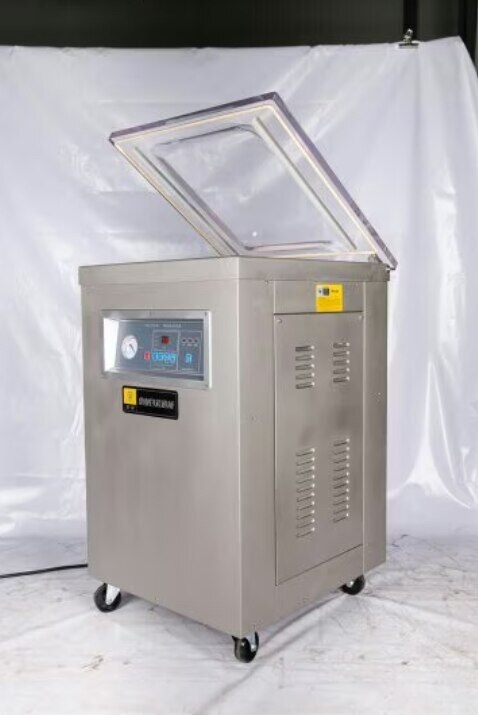
Choose a single chamber for intermittent batch work, mixed products, lower volumes, or a job where one operator needs flexibility. The pouch and product sit inside the chamber; the operator loads, closes the lid, waits for evacuation and sealing, opens it, and unloads from the same space.
| Layout | Operator workflow | Best fit and trade-off |
|---|---|---|
| Single chamber | Load, cycle, unload in one chamber | Simpler operation and maintenance; loading stops production during every cycle |
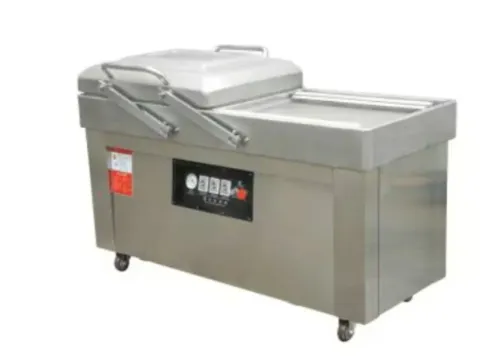
| Double chamber | Load one chamber while the other evacuates and seals; a lid or swing arrangement transfers the next batch into position | Higher production flow; uses more floor space and adds handling and cleaning points |
Do not choose from the pump’s rated capacity or a supplier’s packs-per-minute figure alone. Compare the complete cycle with loading and unloading time, because a fast pump cannot recover time lost while the chamber is open.
Before selecting industrial vacuum packing equipment, ask how it handles wet products and whether the pump has suitable vapor protection. Check how quickly operators can change pouch sizes and whether both chambers use the same sealing controls; different settings or changeover procedures can erase the expected productivity gain.
Neither layout sterilises food or makes perishable products safe without refrigeration. Reduced-oxygen packing still requires validated temperature, shelf-life, and food-safety controls.
How Pouch Choice and Product Condition Change the Result
Suitability starts with the pouch, product condition, and required shelf life—not the pump rating. How vacuum packing works depends on matching each part to the process.
1. Choose a barrier film with oxygen, moisture, puncture, and grease resistance suited to the shelf life. Confirm its sealant layer matches the machine’s heat and dwell range. Before buying equipment, provide pouch thickness, maximum product dimensions, seal width, headspace, and loading pattern.
2. Keep the mouth long enough to lie flat across the sealing bar, with the product below the seal line. Solid foods are straightforward; cool cooked foods under controlled temperatures before packing. Powders need controlled filling and seal-area cleaning because they migrate into the seal.
3. Chill liquids before packing. Falling pressure can make them foam or boil, so use liquid-control or soft-air settings, correct pouch positioning, and pump vapor protection. Keep grease off the seal area and use grease-compatible film.
4. Cover sharp bones, corners, frozen edges, and metal parts. They can puncture the evacuated bag after sealing, even when the seal looks sound. Products that release gas after sealing need a validated package and storage plan because internal gas can inflate the pouch.
5. For external suction machines, confirm whether the equipment requires embossed or channelled bags. Smooth chamber pouches do not automatically work on nozzle machines.
6. Vacuum packing does not sterilise, remove all oxygen, or make perishable food safe at room temperature. Apply refrigeration, temperature control, and validated shelf-life controls.
How to Set, Run, and Verify a Repeatable Vacuum Cycle
Lay the pouch flat across the sealing bar with no wrinkles, grease, powder, or liquid in the seal zone. The vacuum packing machine process becomes repeatable only when loading and settings remain controlled.
- Select vacuum time or target pressure for pouch volume, product load, product temperature, and pump condition. A pressure sensor or transducer is more consistent than a timer alone.
- Set sealing temperature and dwell time from the film supplier’s instructions, then confirm them on the actual machine. Thin laminates can burn; thicker sealants can remain unfused.
- Apply sufficient bar pressure and inspect the sealing wire, PTFE cover, insulation, and alignment before production.
- For liquid carryover, chill the product, reduce evacuation aggressiveness, use a soft-air return, and stop the cycle if liquid reaches the pump line.
| Setting method | Best use | Main limitation |
|---|---|---|
| Timer-only evacuation | Stable pouch loads and closely controlled production | Residual air changes with load, temperature, or pump condition |
| Sensor-controlled evacuation | Mixed loads and repeatable target pressure | Requires a functioning sensor and calibration |
Run consecutive packs and inspect continuous seals, wrinkles, channels, peel strength, leaks, and burst resistance. ASTM F88 measures seal strength; ASTM F1929 detects dye-penetration leaks in porous medical packaging; ASTM F2096 detects gross leaks through pressurisation and bubble emission.
Record settings and reject criteria. On industrial vacuum packing equipment, check pump oil, oil-mist filters, vacuum-line leaks, lid-gasket wear, and thermocouple calibration. These maintenance failures change cycle time and package integrity.
What to Require from a Packaging Machine Supplier Before Purchase
A proposed machine is proven only when it packs your product, not when its empty chamber reaches a low pressure. Ask a packaging machine supplier in Pune to run your product, pouch material, loading pattern, target batch size, and required throughput.
Require a recorded factory-acceptance test that documents:
- Chamber pressure or residual oxygen, where relevant
- Evacuation time, sealing temperature, dwell time, and backfill behaviour
- Consecutive-cycle results and specific reject criteria
- Seal continuity, wrinkles, leaks, and liquid carryover
Ask whether the machine provides gas flushing, liquid-control cycles, recipe storage, pressure sensing, and data recording. Gas flushing needs validation of gas composition, residual oxygen, fill volume, and seal integrity; it is not a substitute for a leak-free seal.
Compare chamber layouts against real loading time:
| Option | Operator workflow | Practical trade-off |
|---|---|---|
| Single chamber | Load, cycle, unload in one space | Simpler handling, but loading time adds to every cycle |
| Double chamber | Load one side while the other cycles | Higher flow, with more floor space and cleaning points |
Inspect whether you can clean the chamber, replace the lid gasket and sealing wire, service the pump, and change oil-mist filters without major dismantling. Poor access turns routine maintenance into lost production.
ASN Packaging PVT LTD is worth assessing only if it records settings, test methods, and maintenance requirements on your materials. Apply the same checklist to any packaging machine supplier vacuum packing for process in pune, including comparisons based on actual operator output rather than headline cycle rates.
Related products
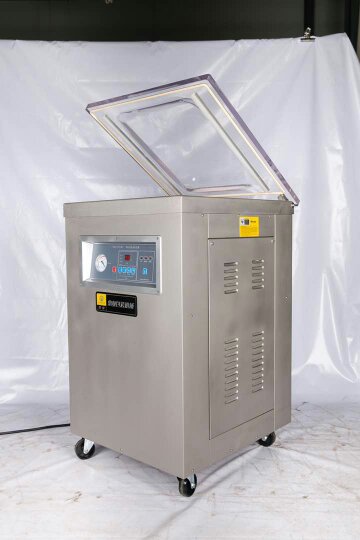 | ₹55000 Product Details: Sealing length 500X 10mm Weight 120kgs Machine size 760X700X 1050mm By utilizing our years of experience, we bring forth a... View product → |
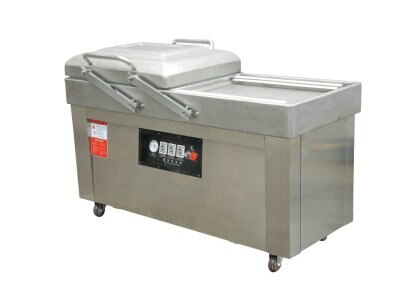 | DOUBLE CHAMBER VACCUM PACK MACHINE ₹175000 DZ 500 / 600 MODEL ARE AVAILABLE WITH DOUBLE CHAMBER SEALING SIZE 500 / 600 MM WITH 12 MM POWER 440 VAC -3 PH 3.5 KW POWER SPEED 6-8 PACK / MIN View product → |
Frequently asked questions
How does a vacuum packing machine work?
The machine closes the pouch inside an airtight chamber, removes air with a vacuum pump, seals the pouch, releases the chamber vacuum, and opens the lid.
When should you choose a single-chamber vacuum packing machine?
Choose a single-chamber layout when your output is moderate, products vary in size, and the operator can load and unload the chamber between cycles.
When is a double-chamber vacuum packing machine a better fit?
Choose a double-chamber layout when you need higher throughput because one chamber can be loaded while the other completes its vacuum and sealing cycle.
How do pouch choice and product condition affect vacuum packing?
Pouch thickness, barrier material, opening size, product temperature, moisture, and sharp edges affect air removal, seal integrity, and the risk of leaks.
What should you verify before buying from a packaging machine supplier?
Request cycle demonstrations using your product and pouch, vacuum and sealing specifications, electrical requirements, spare-parts details, operator training, maintenance instructions, and documented acceptance criteria.