
Choosing tunnel equipment starts with the film, pack pattern and required output—not with a catalogue model or product dimensions alone. You will be able to specify the right machine, expose missing performance data and structure a production trial that tests the complete line before purchase.
Key takeaways
- Separate sealing from heat shrinking when specifying tunnel equipment.
- Match tunnel opening and conveyor speed to your largest pack and target rate.
- Request temperature, airflow, conveyor and film operating limits in writing.
- Run production trials to check shrink quality, recovery and line integration.
Start with the package: seal, shrink and film requirements
A seal and a shrink are different operations. The sealer closes the film; the tunnel applies controlled heat and airflow to tighten it around the product. Use an L-sealer with a tunnel for individual cartons, trays or multipacks wrapped from flat film, while a web-sealer tunnel suits continuous high-volume packing.
A shrink chamber suits intermittent batches or products that cannot travel continuously.
| Option | Main action | Best fit |
|---|---|---|
| Shrink chamber | Heats one loaded pack at a time | Low-volume, variable-size or batch production |
| L-sealer plus hot-air tunnel | Cuts and seals flat film, then shrinks it | Cartons, trays and multipacks requiring a neat sealed bundle |
| Web-sealer tunnel | Continuously seals film around moving products | High-throughput lines with consistent pack dimensions |
| Steam tunnel | Shrinks sleeve material with steam | Bottles and containers using shrink-sleeve labels |
Choose the tunnel against the film, not only the product drawing. Polyolefin, PVC and polyethylene have different shrink-temperature windows, shrink ratios and dwell times. Obtain the film supplier’s recommended temperature, airflow and conveyor-speed range before selecting an industrial tunnel packaging machine.
Give the manufacturer these production facts:
- Product length, width, height, weight and least-favourable orientation
- Film type, layflat width, thickness and sealing temperature
- Packs per minute, operating hours and required accumulation
- Whether the line uses an L-sealer, bundler, wrapper or web sealer
- Available conveyor width, floor space and upstream/downstream machine heights
A hot-air tunnel is not a steam-tunnel substitute. Confirm that the proposed process matches the package geometry and film.
Match tunnel capacity to dimensions, speed and floor layout
The tunnel opening and conveyor must accommodate the largest loaded pack, maintain the required heat exposure, and fit the available floor path. Measure the pack after sealing, not just the product: film tails, skewed orientation, product movement and accumulation at the entrance can require clearance beyond the drawing’s width and height.
Specify these inputs before accepting a tunnel size:
- Maximum pack width, height, length and weight
- Pack orientation, including the least favourable position
- Film type, recommended temperature window and required dwell time
- Target packs per minute, minimum and maximum line speeds
- Conveyor width, usable tunnel opening, belt material and load rating
- Conveyor height, travel direction, transfer gaps and accumulation length
- Available floor space, maintenance access and electrical-service location
Throughput depends on residence time, not only belt speed. A taller or heavier pack may need slower travel or stronger airflow, while an overfilled conveyor can block circulation and produce loose film on the centre packs.
Calculate the tunnel length from the required dwell time at the target speed, then check that the same tunnel works during low-speed operation and restart.
A packaging machine manufacturer’s tunnel machine in Pune must also match the existing line. Require interface drawings for conveyor height, direction, opening, upstream and downstream speeds, control signals and emergency-stop circuits.
Leave safe access for heater replacement, blower service, belt tracking and temperature-sensor changes; a compact tunnel that cannot be serviced can cost more in lost production than a larger layout.
Demand the operating limits behind the model number
A model number such as 450 ASN is not proof of capacity; obtain the operating limits that show whether it can process your largest loaded pack at the required rate. Ask the tunnel machine manufacturer for signed figures, not catalogue estimates.
- Maximum usable opening: width and height after allowing clearance for film tails, pack movement and accumulation.
- Conveyor load: maximum kilograms per metre, belt width, belt material and permissible pack footprint.
- Conveyor speed: minimum and maximum metres per minute, plus the pack-per-minute output at each speed.
- Temperature range: setpoint range, temperature uniformity across the chamber and the film supplier’s recommended operating window.
- Warm-up time: time from a cold start to stable production temperature.
- Thermal and electrical data: heater rating, connected load, supply voltage, phase, current and airflow adjustment.
- Film limits: compatible polyolefin, PVC or polyethylene grades, thickness, shrink ratio and required dwell time.
- Interface dimensions: conveyor height, usable entry and exit, line direction, emergency-stop circuit and upstream/downstream signal requirements.
Use the figures to compare the model against your actual requirement:
| Figure to verify | Why it matters | Failure if ignored |
|---|---|---|
| Opening width and height | Includes the largest loaded pack and clearance | Film catches, packs tilt or jams |
| Speed and throughput | Converts conveyor movement into real output | The line misses its pack-per-minute target |
| Temperature, airflow and dwell | Matches film shrink behaviour | Seals distort, film burns or remains loose |
| Load and belt specification | Supports weight and pack pattern | Belt slips, marks packs or wears early |
A packaging machine manufacturer in Pune should also identify which heaters, blowers, thermocouples and controls are made in-house, then supply wiring diagrams and critical-spares part numbers.
Use a production trial to prove shrink quality and recovery
Run the trial with the exact product, pack pattern, film roll, sealer and conveyor that will enter production. A visually attractive pack proves little if it only succeeds at one speed or after the tunnel has warmed for an hour.
Build the acceptance protocol around these trial conditions:
- Use the largest and smallest loaded packs, including the least favourable orientation and the full film tail or overlap.
- Run the minimum, target and maximum line speeds, then record tunnel temperature, airflow setting, dwell time and packs per minute.
- Start from a cold machine and inspect the first packs for loose film, holes, scorching, open seals and uneven corners.
- Stop the conveyor, restart it, and test recovery after an accumulation at the tunnel entrance.
- Repeat the run with normal product variation, film splices and a realistic upstream interruption.
- Check pack clearance when products shift, rotate or bunch together; the opening must accommodate the loaded pack, not only its drawing.
Set pass criteria before testing. Define acceptable seal strength, film tightness, wrinkles, burn marks, exposed corners and pack deformation, then inspect samples across the entire run rather than approving one good pack.
Ask for the trial record from the industrial tunnel packaging machine supplier. It should identify the film specification, temperature zones, conveyor speed, faults observed, recovery time and adjustments required. A machine that needs constant manual retuning at the target rate has not proved production readiness.
Evaluate the Pune supplier as an installed-line partner
Choose the supplier that can deliver a recoverable production line, not merely a heated cabinet. Compare the installed scope: tunnel, conveyor, guarding, controls, commissioning, spare parts and operator training.
| Supplier area | Evidence to compare | Risk if missing |
|---|---|---|
| Integration | Interface drawings showing conveyor height, direction, usable opening, line speeds, electrical signals and emergency-stop links | Poor handoff causes jams, unsafe stops or incompatible speeds |
| Electrical documentation | Wiring diagrams, component part numbers, connected load, expected operating load and controller fault codes | Troubleshooting becomes guesswork and energy cost is miscalculated |
| Safety controls | Risk assessment covering hot surfaces, moving conveyors, access doors and unexpected restart; benchmark ISO 12100 and ISO 13849-1 | Operators face hazards that a basic guard does not control |
| Serviceability | Safe access to heaters, blowers, bearings, belts, temperature sensors and controller diagnostics | A small failure creates a long line stoppage |
| Lifecycle support | Critical-spares list, heater and thermocouple availability, standard belt specifications, response times and commissioning records | Low purchase price becomes expensive downtime |
Ask which parts the tunnel equipment supplier in Pune manufactures in-house and which it buys out. Require pneumatic or electrical schematics, a recommended spares list and measured energy data, not only the heater rating.
A packaging machine manufacturer in Pune such as ASN Packaging PVT LTD should be assessed against the complete installed system, including integration with your wrapper, carton sealer, cooling conveyor or coder. Compare belt tracking adjustment and replacement access before approving a compact design; inaccessible parts can cost more in lost production than a larger tunnel.
Related products
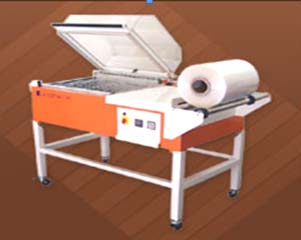 | ₹38000 It is suitable for heavy weight products for multiple packaging matrix, Requires two rolls of packaging materials pneumatic web sealer with stick... View product → |
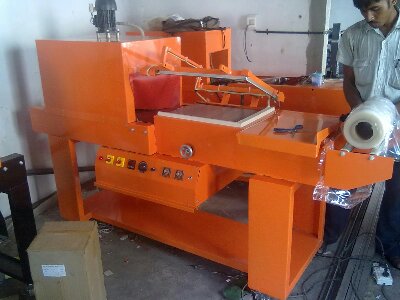 | COMBO SHRINK L-SEALER AND TUNNEL MACHINE ₹95000 Features: • Stainless steel product-loading tray • Durable silicone sealing pad • Long lasting heating element cool down function for delayed power... View product → |
Frequently asked questions
What is the difference between a sealer and a shrink tunnel?
The sealer closes the film, while the tunnel applies controlled heat and airflow to tighten it around the product.
How do you match tunnel capacity to a packaging line?
Compare the tunnel opening, conveyor speed, pack dimensions, required throughput and available floor space before selecting a model.
Which operating limits should you request from a tunnel equipment supplier?
Request the temperature range, airflow settings, conveyor load, conveyor speed range, film compatibility and maximum pack dimensions.
Why run a production trial before buying tunnel equipment?
A trial verifies shrink quality, seal integrity, film recovery and line performance using your products, film and target speed.
Related products
 | ₹335000 The unit packs duly collated Automated & put in to In-feed Line Conveyor. The sealing shall be WEB SEALER suitable for above product. View product → |
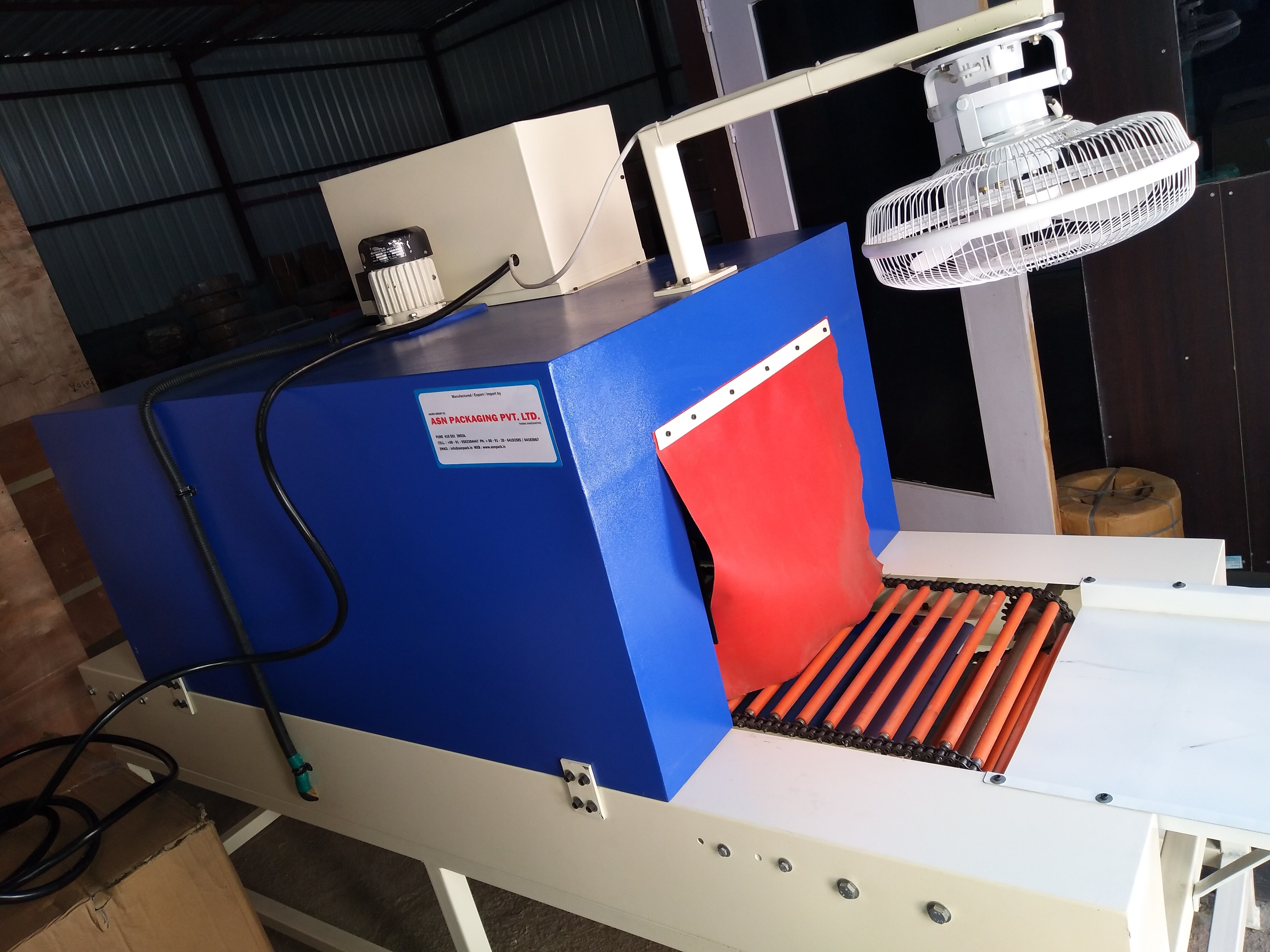 | ₹135000 SHRINK TUNNEL MACHINE MODEL 450 ASN SIZE 400 X 250 MM LENGTH 45 INCH POWER 6-8 KW , 440 VAC -3 PH HEAVY-DUTY STRUCTRE View product → |