
A small food business must match the sealer to its product, tray resin, lidding film, production volume and electrical installation—not just the advertised packs-per-hour figure. By checking the sealing process, tooling, packaging alternatives and acceptance tests, you can decide whether this tray-sealing format fits your operation and what to demand from a supplier.
Key takeaways
- Test filled trays, not empty trays, before approving the sealing mould.
- Confirm polymer, dimensions, flange width, corner radius and product height.
- Inspect every seal for wrinkles, channels, incomplete bonding and contamination.
- Compare tray sealing with vacuum packing based on product, shelf life and presentation.
When is a tray sealer suitable for your small food business?
Choose a tray sealer when you sell portioned food in rigid or semi-rigid trays and need repeatable lidding, presentation and leak resistance. Confirm the tray polymer, dimensions, flange width, corner radius, product height and fill weight with real samples; a die that fits an empty tray can fail once food reaches the flange.
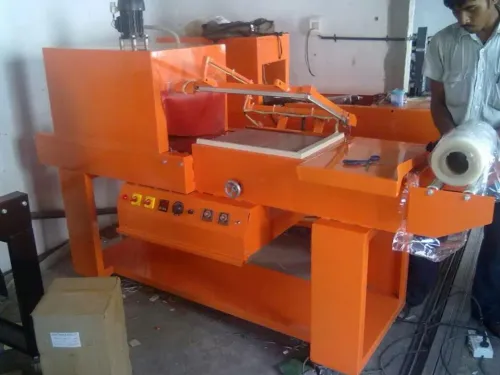
A pedal sealer normally closes preformed bags or pouches. A tray sealer uses a matched die, heated sealing surface and controlled pressure to bond lidding film to a tray, so treating them as interchangeable creates poor seals and wasted packs.
| Option | Best fit | Main trade-off |
|---|---|---|
| Manual tray sealer | Short runs, several products or tray sizes | Lower output; operator loads, aligns and removes every tray |
| Semi-automatic tray sealer | Regular batches with moderate variety | Faster repeatability; cleaning and change parts still take time |
| Automatic line | High daily volume and few standard formats | Higher space, tooling, compressed-air and integration demands |
Measure sustained good packs per hour, not the brochure cycle rate. Deduct loading, film changes, die cleaning, spills, rejected packs, changeovers and breaks; high volume justifies automation only after these losses are counted.
Check the site before choosing a tray sealer for small food businesses:
- Single- or three-phase supply, correct voltage, stable power and verified earthing
- Compressed-air pressure and quality, if the machine requires pneumatics
- Washable surfaces, drainage, ambient heat, humidity and room clearance
This tray sealing machine suitability check is essential for a pedal sealer machine manufacturer tray sealer for small food businesses in Pune.
How do you load, seal and inspect a tray correctly?
One operator can usually run a pedal-operated tray sealer continuously, but the pedal removes hand pressing—not the work around each cycle. Tray sealing machine suitability depends on how quickly that operator can load, align, start, discharge, inspect and clean without creating rejected packs.
- Place the filled tray squarely into the matched die. Keep the flange free of oil, sauce, powder, meat residue and condensation; one smear can create a leak channel.
- Position the lidding film with its sealant side against the tray flange. Keep the film flat, centred and free from wrinkles.
- Start the cycle using the pedal or control. Hold the tray and film correctly while the machine closes, then wait for the full sealing dwell.
- Remove the sealed tray after the die opens. Do not pull the film while the seal is still hot.
- Inspect the entire perimeter for an unbroken seal, wrinkles, trapped food, channels, lifted corners or tray deformation. Test suspect packs for leakage rather than accepting appearance alone.
- Clean spills from the die and sealing surface before the next cycle. Film alignment, loading, discharge, cleaning and cycle initiation remain manual tasks.
Temperature, dwell time and pressure work together. Excessive heat or dwell can deform PP or PET trays and damage easy-open seals; insufficient heat, pressure or dwell produces weak seals and leaks.
Run acceptance trials with the messiest realistic product, at the intended fill weight and speed—not only empty, clean trays. A food tray sealer in Pune should prove repeatable packs through loading, cleaning and continuous operation, not just a successful demonstration cycle.
Will your trays, film and moulds work with the machine?
Tray sealing machine suitability depends on the tray, film and die together, not on the machine’s advertised sealing area. For a tray sealer for small food businesses, record the tray polymer and grade: PP, PET, CPET, aluminium, or paperboard with a sealable coating.
Match it with a lidding film whose sealant layer and coating are designed for that material, and specify film thickness. A film that seals to PP can fail on PET.
- Measure an actual empty tray: cavity length and width, flange width, corner radius and maximum filled product height. Confirm that these measurements fit the usable mould area, not merely the catalogue sealing area.
- Provide filled samples of both tray formats named in your quotation. Ask whether each requires a separate mould or change part, whether both are included, and how many minutes a size change takes.
- Confirm the required film width, including edge allowance, and state whether tooling is supplied, charged separately or fabricated to order.
- Request a written die drawing showing cavity positions, flange support, sealing dimensions and maximum height. Have the supplier run both filled tray sizes through a production trial using your actual film and the messiest realistic product.
Reject a compatibility claim based only on photographs or a standard mould. Keep the trial packs and record seal appearance, wrinkles, unsealed channels, tray distortion and leaks; a clean empty tray can conceal failures caused by sauce, oil, powder or condensation.
Should you use tray sealing, vacuum packing or another pack format?
Choose tray sealing when portioned foods need rigid presentation, a peelable or strong lidding seal, and consistent retail handling. It becomes the wrong choice when the product must tolerate compression, needs headspace, or cannot retain a rigid display shape.
A tray sealer for small food businesses depends on the product and pack handling, not only machine size; confirm tray material, dimensions, fill weight and daily volume before buying. That is the core tray sealing machine suitability test.
| Option | Best fit | Main limitation |
|---|---|---|
| Tray sealing | Portion-controlled food in rigid trays | Needs matched film, die and clean flange |
| Hand sealing or pre-cut covers | Very low volumes | More alignment variation, labour and leak risk |
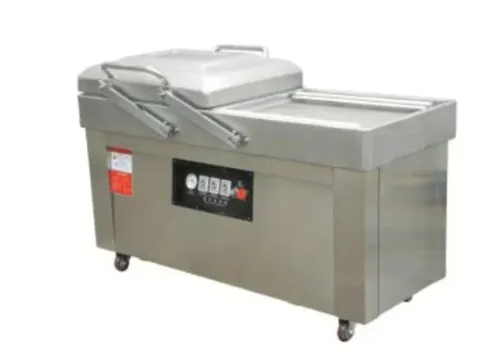
| Vacuum packing | Products that tolerate film contact and compression | Poor for delicate food, headspace or rigid display |
| Shrink wrapping | Bundles or tamper presentation | Not a hermetically sealed food tray |
A pedal-operated sealer can reduce hand pressing, but the operator still loads trays, aligns film, starts each cycle and removes packs. Use a vacuum packer only when compression is acceptable; use shrink wrap for outer presentation, not tray sealing.
Heat sealing alone is not modified-atmosphere packaging. Gas flushing needs controlled evacuation or flushing, compatible tray and film, a suitable gas mix, validated residual oxygen and seal-integrity testing. MAP shelf life also depends on the cold chain and microbiological controls, so do not claim extended life from a basic heat seal.
What should you demand from a Pune supplier before accepting the machine?
Accept the machine only after a live production trial proves it works with your tray, lidding film, product, operating speed and cleaning routine. A catalogue sealing-area figure is not proof of fit.
| Manufacturer, importer or trader | What to demand before purchase | Warning sign |
|---|---|---|
| Manufacturer | Die drawing, included tooling, utilities, training and written test results | Trial uses only empty trays |
| Importer | Original machine specifications, local service contact and spare-part lead times | No local stock or named technician |
| Trader | Supplier identity, warranty responsibility and commissioning record | Responsibilities shift between seller and service agent |
Write acceptance criteria for seal appearance, peel force, leak performance and rejected-pack rate. Use peel or seal-strength testing such as ASTM F88/F88M to compare temperature, pressure and dwell settings, but add leak testing: strong seals can still contain microchannels and do not prove shelf life.
Request food-contact declarations, material specifications and applicable migration documentation for both tray and film. FSSAI packaging compliance addresses packaging safety; it does not certify the machine’s seal.
Ask ASN Packaging PVT LTD, or any shortlisted food tray sealer in Pune supplier, to state every included die, utility, training session and spare-part lead time. Put the AMC in writing:
- Response time and preventive-maintenance schedule
- Coverage for heaters, PTFE covers, thermocouples, sensors and pneumatic parts
- Calibration or temperature-verification checks
- Remote support and contamination-related exclusions
A pedal sealer machine manufacturer tray sealer for small food businesses in Pune should not be accepted without these documents and trial records.
Related product
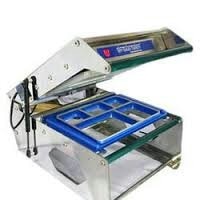 | ₹22500 Model SPTS-200 Voltage (V/Hz) 220/50 Total Power(W) 650 Tray size(LxW)mm 190 x 142, 136 x 101 (250 gm Two tray) Sealing Speed Per Hour 350 to 500... View product → |
Frequently asked questions
When is a tray sealer suitable for a small food business?
Choose tray sealing when you sell portioned food in rigid or semi-rigid trays and need repeatable lidding, presentation and leak resistance.
How should you load and inspect a tray before sealing?
Use a clean tray with food below the flange, load it squarely into the mould, seal with compatible film, and inspect the full perimeter for wrinkles, channels, contamination and incomplete bonding.
Will any tray, film and mould work with a tray sealer?
No. Confirm the tray polymer, dimensions, flange width, corner radius, product height and fill weight with real samples before approving the mould and film combination.
Should a small food business choose tray sealing or vacuum packing?
Choose tray sealing for portion presentation and rigid packs; compare vacuum packing when oxygen reduction and flexible packaging matter more than display shape.
What should you ask a Pune tray sealer supplier before accepting the machine?
Ask the supplier to run your filled trays, confirm the mould and film specifications, demonstrate seal inspection, and provide operating, cleaning, maintenance and spare-parts information.