
Pune manufacturers need to match a shrink-wrapping format to the product, film, production rate and available floor space—not choose a machine from a catalogue speed alone. By the end, you will be able to identify suitable applications, specify the right equipment, validate operating settings and compare an integrated line with simpler packaging methods.
Key takeaways
- Match seal length, tunnel size and conveyor load to your largest pack.
- Validate seal strength, film shrinkage and product temperature before production.
- Choose combo wrapping when one integrated line saves floor space and handling.
- Specify guarding, electrical requirements, commissioning and response times before purchase.
What combo shrink wrapping means—and where it fits
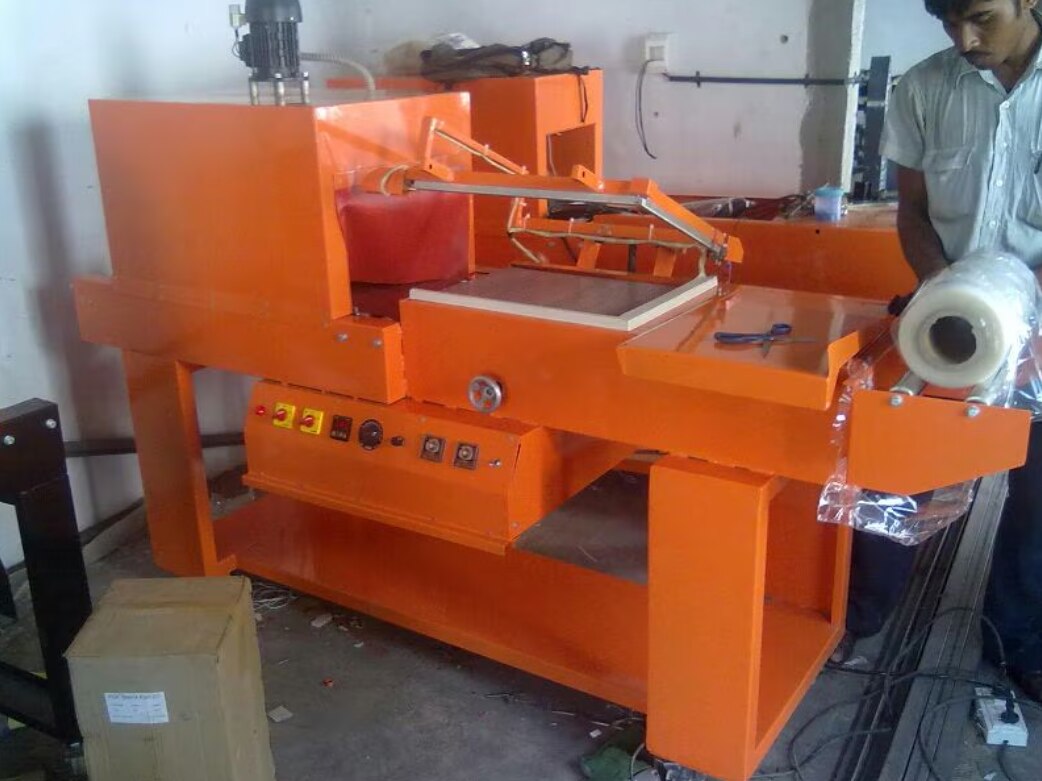
A combo shrink packaging machine combines an L-bar or side-seal film sealer with a heated shrink tunnel in one integrated unit. The product is collated, film unwinds around it, the seal bar closes the film, and the tunnel applies heat before cooling and discharge.
It is different from a standalone tunnel, sleeve wrapper or vacuum-shrink machine.
Combo shrink wrapping uses suit secondary packs that need grouping, dust protection or improved handling rather than a hermetic barrier. The film is not automatically approved for direct food or pharmaceutical contact; request product-contact documentation for those applications.
| Application | Typical pack | Why it fits |
|---|---|---|
| Carton bundles | FMCG, pharmaceutical outer cartons or printed cartons | Holds multiple cartons together for storage and dispatch |
| Printed-material bundles | Books, labels, brochures or stationery | Protects aligned stacks from dust and moisture |
| Bottles, cans and trays | Beverage, personal-care or industrial consumable multipacks | Creates stable retail or transport groupings |
| Hardware and electrical boxes | Fasteners, switches, fittings and accessories | Keeps small boxes together without strapping |
| Industrial components | Regularly shaped parts and automotive spares | Adds a clean secondary pack for internal movement or export dispatch |
For a Pune plant, the machine fits best when products have repeatable dimensions, stable collation patterns and enough volume to justify automatic sealing. The integrated layout reduces floor space and transfer handling, but the tunnel can limit output even when the sealer runs faster.
Test the actual product, pack pattern and film, not an empty-cycle figure, especially after conditioning film in Pune’s hot, humid monsoon conditions.
Match the machine to your product and pack format
Give the supplier more than product dimensions: provide the largest and smallest pack, product weight, shape, rigidity, and collation pattern. A shrink wrapper sized for one carton can fail on a flexible bundle or tall bottle pack. This is the information needed for reliable shrink wrapping for manufacturers in pune.
- State maximum film width, film type, and gauge, such as PE, POF, or PVC, and identify whether the film touches food or pharmaceutical product. Request the film’s food-contact or product-contact compliance documents; machine suitability does not prove film compliance.
- Specify seal-bar length, maximum pack length, width, and height, plus tunnel opening dimensions. Include clearance for irregular corners and protruding parts.
- Give the required product pitch, packs per minute, operating hours, and acceptable pack appearance: tightness, wrinkles, seal visibility, and permitted film tails.
- Record electrical supply, connected load, plug or phase arrangement, and available floor space, including infeed, discharge, operator access, and maintenance clearance.
- Condition film in its original packaging, away from sunlight and moisture, before trials in Pune’s hot, humid monsoon conditions. Unconditioned film can curl, block, seal unevenly, or create static that looks like a machine fault.
| Pack feature | Machine implication | Confirm during trial |
|---|---|---|
| Carton or tray collation | Sets infeed pitch and tunnel residence time | Actual pack pattern |
| Heavy or irregular product | Requires stronger film and seal support | Seal strength and discharge stability |
| High output target | Tunnel capacity can limit the sealer | Packs per minute with production film |
| Appearance-sensitive pack | Needs controlled temperature, speed, and cooling | Wrinkle and film-tail limits |
How the sealing and shrinking process should be validated
A reliable cycle is proven with the heaviest, largest and most difficult pack you will run—not an empty-machine cycle. Combo shrink wrapping uses an L-bar or side-seal unit to enclose the collation in film, then a heated tunnel to draw the film tight; the tunnel can limit output even when the sealer cycles faster.
- Collate the product and confirm the pack length, width, height, weight and pitch. Record the required packs per minute.
- Unwind the selected film and check its width, gauge, shrink direction and suitability for the product. Food or pharmaceutical packs need separate product-contact compliance documents; machine suitability does not prove film compliance.
- Set seal-bar temperature and dwell time until the seal closes fully without film burn-through, open corners or product contact. Check seal strength across repeated packs.
- Set tunnel temperature and conveyor speed together. Increase heat or reduce speed only when wrinkles remain; excessive heat distorts bottles, softens cartons and wastes energy.
- Run a sustained trial using the actual film, pack pattern and product. Inspect centre seals, end seals, film tension, wrinkles, holes, trapped air and pack dimensions at the discharge.
- Record each setting and test at startup, after film changes and after maintenance. Accept the cycle only when output, seal integrity, appearance and product protection remain within written limits.
Keep a sample from each trial and log film lot, temperatures, dwell time, conveyor speed and defects. A setting that works on one film gauge can fail after a supplier or material change.
When an integrated combo machine beats other wrapping methods
Choose an integrated L-sealer-and-tunnel machine when you need repeatable secondary packs, continuous flow and less handling between sealing and shrinking. A combo shrink packaging machine suits cartons, trays, bottle or can multipacks, bundled boxes and industrial components when dust protection and presentation matter more than a hermetic barrier.
| Option | Choose it when | Why the combo machine may be better |
|---|---|---|
| Manual wrapping | Volumes are low, pack sizes change hourly or capital must stay minimal | Manual film cutting and heat sealing create slower output, uneven seals and higher labour dependence |
| Chamber machine | Products are irregular, delicate or processed in small batches | It offers batch flexibility, but chamber loading limits flow and operator time |
| Standalone tunnel | You already have an upstream L-sealer or need a higher-capacity modular line | The separate units need more floor space and transfer handling |
| Carton sealer | Standard corrugated cartons need fast tape closure for shipment | Tape sealing closes a carton; it does not bundle products or provide shrink-film protection |
| Strapping machine | You need compression and load stability for pallet or carton bundles | Strapping leaves most surfaces exposed and can mark light packaging |
Select the combo when the sealing rate and tunnel capacity match your real product pitch, pack pattern and film. Validate packs per minute with the heaviest product, not the empty-cycle figure; the tunnel can become the bottleneck.
For shrink wrapping for manufacturers in Pune, the integrated layout also reduces footprint and handling across a busy plant. Choose another method when frequent format changes, very low volume or pallet-load security outweighs continuous shrink-pack output.
Specify installation, safety and service for a Pune plant
Accept the machine only after a witnessed production trial, not an empty-cycle demonstration. For combo shrink wrapping applications in Pune, condition the actual film in the plant before testing; store it in its original packaging, away from sun and monsoon moisture. Record the product, pack pattern, film type and gauge, temperature, speed and tunnel settings.
- Confirm the installed machine against the approved drawing: maximum film width, seal-bar length, tunnel opening, product pitch, floor space, electrical supply and connected load.
- Run the heaviest and largest approved pack at the required packs per minute. Record sealer rate, tunnel temperature stability, film consumption, changeover time, discharge quality and recovery after a power interruption.
- Inspect every sample for seal continuity, burn-through, open corners, wrinkles, curl, blocking, static and product movement. Perform the agreed seal-integrity check and retain dated samples with the trial report.
- Operate every emergency stop and verify that sealing, conveyors and heaters reach a safe state. Check guards around the seal bar and tunnel hot zones, interlocks, warning labels and safe access for cleaning and heater replacement.
- Obtain the electrical test record, risk assessment against ISO 12100, operating manual, wiring diagram, spare-parts list, preventive-maintenance schedule and operator-training record.
- Get written response times, escalation contacts and service coverage for Pune. ASN Packaging PVT LTD can be evaluated on the same evidence: documented commissioning, accessible spares and an AMC scope with inspection tasks, exclusions and response commitments.
For food or pharmaceutical packs, file the film’s food-contact or product-contact compliance documents separately; machine suitability does not prove film compliance. Acceptance is complete only when deviations, corrective actions and final settings are signed by both parties.
Related products
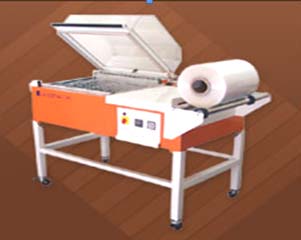 | ₹38000 It is suitable for heavy weight products for multiple packaging matrix, Requires two rolls of packaging materials pneumatic web sealer with stick... View product → |
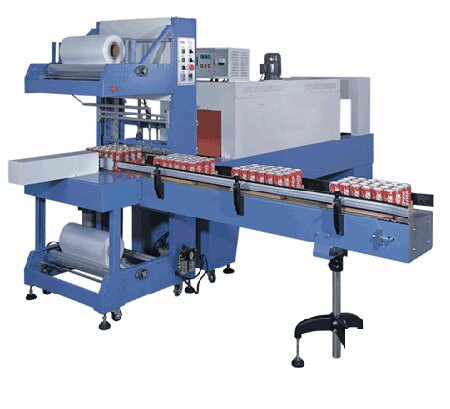 | ₹335000 The unit packs duly collated Automated & put in to In-feed Line Conveyor. The sealing shall be WEB SEALER suitable for above product. View product → |
Frequently asked questions
What does combo shrink wrapping mean?
It combines an L-bar or side-seal film sealer with a heated shrink tunnel in one machine. The product is wrapped, sealed, heated, cooled and discharged in sequence.
How do you match a combo shrink machine to a product?
Check the product dimensions, pack orientation, collating pattern, film type, seal size, tunnel opening and conveyor load. Use the largest product and heaviest pack as design limits.
How should you validate the sealing and shrinking process?
Test seal strength, film coverage, shrink appearance, product temperature and pack integrity at production speed. Record film type, sealing temperature, dwell time, tunnel temperature and conveyor speed.
When is an integrated combo machine a better choice?
It suits manufacturers that need a continuous sealing-and-shrinking workflow with less manual handling, fewer transfers and a smaller footprint than separate machines.
Related products
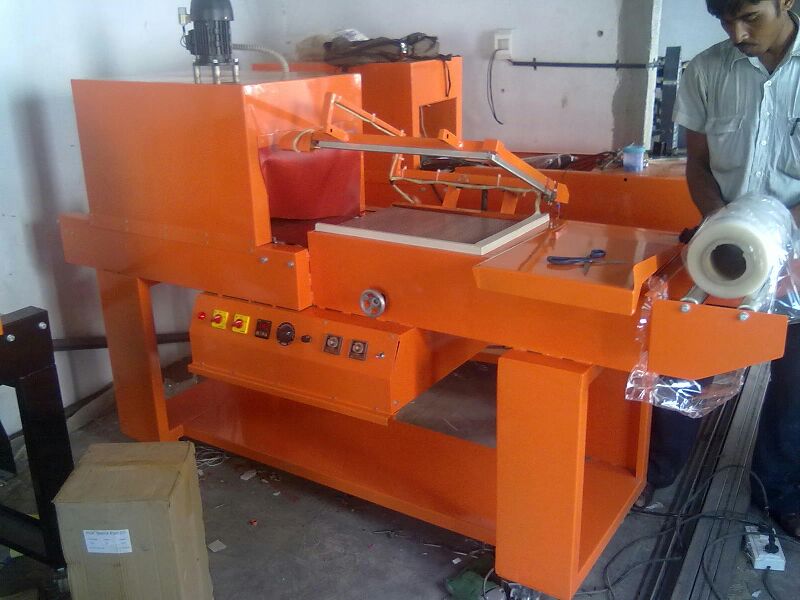 | combo type shrink wrapping machine ₹85000 shrink wrap machine size 1520 View product → |
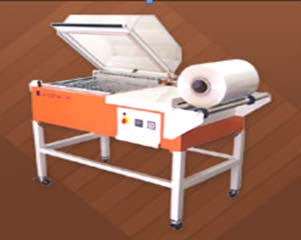 | ₹35000 We are engaged in manufacturing of qualitative range of shrink packaging Machines, which provide solutions for a wide variety of packaging... View product → |
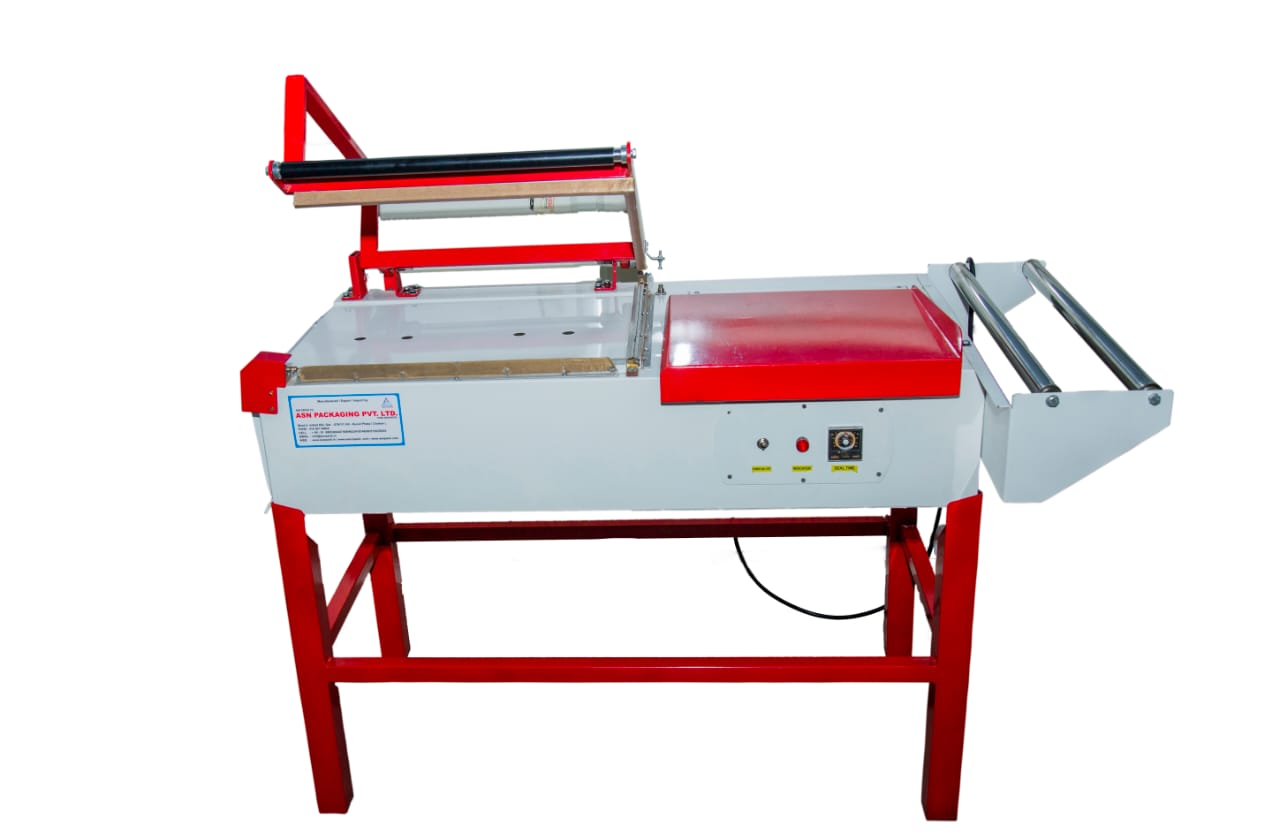 | Shrink L-Sealer Machines It is Suitable for Small Bags Packing And Adopts Electronic Constant temp. control System and variable speed adjusting transmission mechanism . View product → |
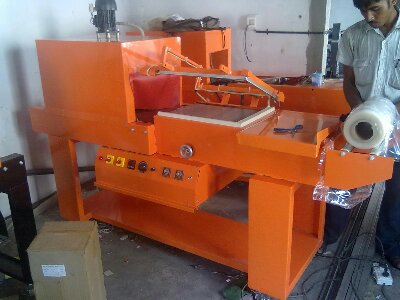 | COMBO SHRINK L-SEALER AND TUNNEL MACHINE ₹95000 Features: • Stainless steel product-loading tray • Durable silicone sealing pad • Long lasting heating element cool down function for delayed power... View product → |