
Pune manufacturers need to match vacuum packaging equipment to the product, pouch, hygiene risk and actual loading pattern—not just a catalogue speed. By the end, you will know which industries benefit from two alternating chambers, how to compare machine formats, and which tests and service details to demand before purchase.
Key takeaways
- Use double-chamber vacuum packing for barrier pouches and repeatable sealing.
- Compare chamber size with pouch dimensions, product height and loading time.
- Specify vacuum level, seal temperature and pouch structure before purchasing.
- Include installation, operator training, spare parts and response times in support terms.
Where double-chamber vacuum packaging fits Pune operations
Pune’s food processors, pharmaceutical suppliers and engineering manufacturers can use a double-chamber vacuum machine when a flexible barrier pouch must remove air, seal reliably and protect the contents during handling or transport. These double-chamber vacuum packaging uses suit deboned meat, seafood, cheese, prepared foods, coffee, spices, powders and non-food components.
| Product family | What the pack achieves |
|---|---|
| Meat, seafood, cheese and prepared foods | Removes air and seals a barrier pouch; chilled packs still require refrigeration, time-temperature control and a HACCP-based process. |
| Coffee, spices and powders | Reduces oxidation exposure and contains fine material; select films and filtration that prevent dust or product from reaching the pump. |
| Pharmaceutical materials | Contains materials in a controlled pouch; sterile-barrier work requires validated packaging and sealing processes. |
| Electronics-related components | Limits handling contamination and moisture or oxidation exposure with a suitable barrier film. |
| Bearings, fasteners and oily machined parts | Retains oil or grease and prevents leakage during storage and export transport. |
| Corrosion-sensitive engineering goods | Reduces air exposure and protects surfaces from contamination, abrasion and handling damage. |
Vacuum packing applications for industry do not include sterilization. Vacuum packaging is not a kill step and cannot make contaminated food safe. For pharmaceutical or sterile-barrier work, ISO 11607 validation covers the packaging system, sterilization process, distribution hazards and maintenance of sterile integrity; a vacuum cycle alone cannot establish sterility or shelf life.
How the two chambers change the work cycle and real output
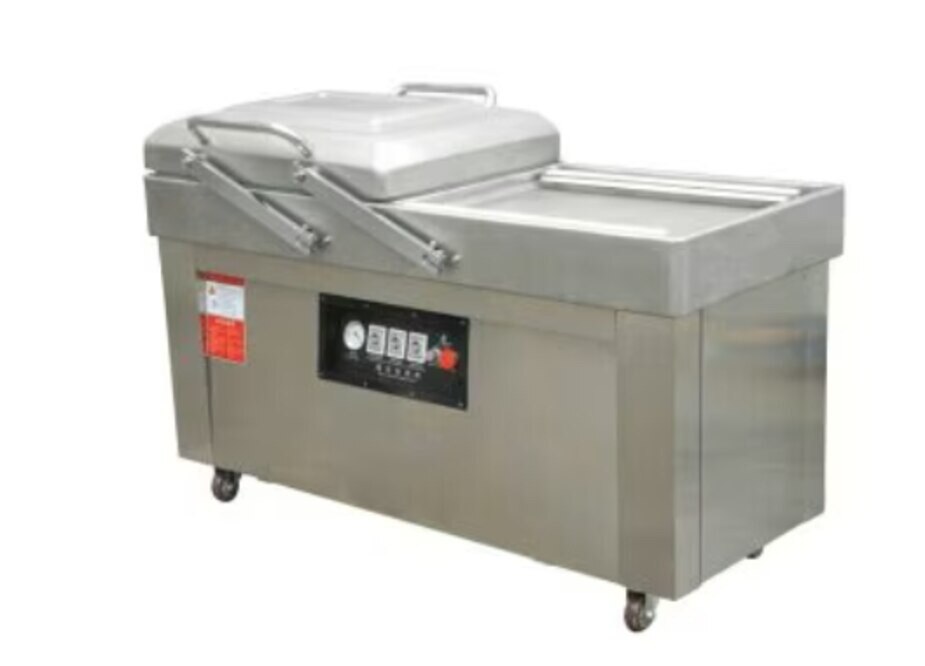
The two chambers increase output by keeping the operator working while the machine evacuates and seals, not by running two independent vacuum pumps simultaneously. The operator alternates the work between chambers.
- Place one or more prepared pouches in chamber A and position each pouch mouth on the sealing bar.
- Close the lid, select the evacuation level and sealing settings, then start the cycle.
- While chamber A evacuates and seals, open chamber B, unload its finished pack and reload it with prepared pouches.
- When the lid opens, switch chambers and repeat the sequence.
Calculate throughput from completed packs per hour, not pump displacement. Count the pouches produced in one chamber cycle, divide by the full cycle time including loading, evacuation, sealing, lid movement and unloading, then allow for operator pauses, pouch adjustment and rejected seals.
A published rate of 6–8 packs per minute is a test claim, not a universal production rate. Ask whether it means packs per chamber cycle, how many pouches fit in that cycle and what product was tested.
An industrial packaging machine for double chamber vacuum applications in Pune must be judged using your pouch size, product thickness, vacuum level, seal time, lid movement and operator loading pattern. A larger pump will not improve output if sealing or manual loading remains the bottleneck.
When a double chamber machine is better than another packaging format
Choose two alternating chambers when you pack flexible barrier pouches repeatedly and want the operator loading one chamber while the other evacuates and seals. This suits higher operator utilisation, but not every product needs the added footprint or cycle complexity.
| Option | Best fit | Main trade-off |
|---|---|---|
| Double chamber | Repeated manual loading, flexible pouches, higher output | Needs chamber space, loading discipline and process validation |
| Single chamber | Low demand, tight floor space, simple cycles | The operator waits for each cycle before unloading and reloading |
| External-nozzle packer | Large bags, irregular products or items that cannot enter a chamber | Uses a nozzle for air removal and a separate sealing arrangement |
| Tray sealer | Rigid trays, presentation packs and controlled sealing around a tray flange | Does not replace flexible-pouch vacuum packing |
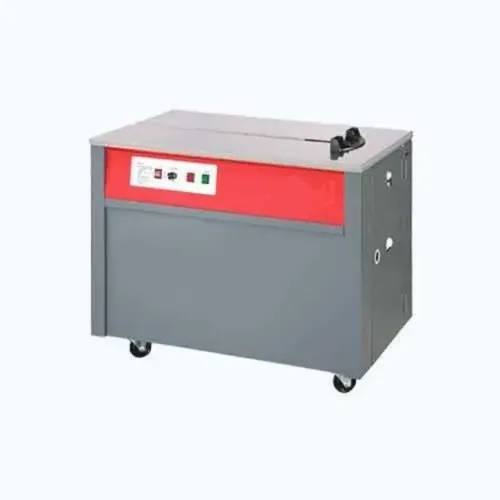
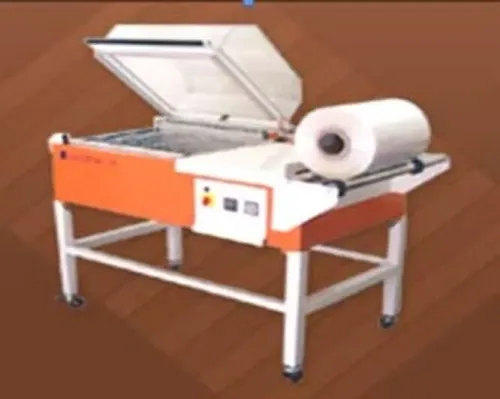
| Shrink chamber | Heat-shrink film and a tight outer wrap | Shrink appearance is the objective, not basic pouch air removal |
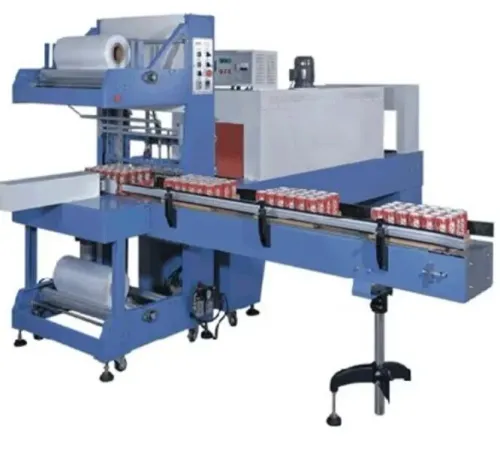
| Modified-atmosphere line | Controlled gas composition, automated conveying, high throughput or retail shelf-life control | Requires gas management and broader validation than vacuum alone |
Make the decision from product format, hygiene level, output, labour and validation needs. For an industrial vacuum packing machine in Pune, a double chamber fits oily components, prepared foods or barrier-pouch parts when manual loading is practical.
Choose another format when the pack geometry, presentation, gas recipe or validated shelf-life process matters more than air removal. These are distinct vacuum packing applications for industry.
How to specify chamber fit, vacuum performance and pouch materials
A machine that fits the product but not the pouch mouth, sealing layout or loading pattern will miss its output target. For double-chamber vacuum packaging uses, measure the complete pack before comparing pump size or external machine dimensions.
1. Record product length, width, height, orientation, pouch length and width, pouch-mouth position, pouches per cycle and required packs per hour. Include trays, bulky parts and stacked pouches.
2. Request the maximum usable chamber length, width and height. Confirm clearance around the product, not merely the machine’s outside dimensions.
3. Ask for the number and layout of sealing bars, usable sealing length on each bar, and whether one or multiple pouches seal per cycle. Check that the mouth reaches the bar without folding or contaminating the seal area.
4. Obtain pump type, displacement, capacity, ultimate vacuum, vacuum-sensor range, programmable evacuation rate and recommended settings. Ultimate vacuum is a pump specification, not proof of package performance; run the actual product and bag through a witnessed sample test.
5. For liquids, test chilled or partially frozen product with adequate headspace, slower evacuation and liquid-control programming. Prevent boil-over, foam, pump-oil contamination and weak seals.
6. For powders, confirm dust filtration, pump protection and bag presentation. For sharp parts, oily components, hot goods and fragile products, test puncture resistance, cooling time, seal contamination and product deformation.
7. Qualify the film type and total thickness with the actual supplier. Record seal temperature, dwell, pressure and cooling; these determine seal quality as much as chamber fit. This is essential when selecting an industrial vacuum packing machine in Pune.
What Pune commissioning and after-sales support should include
Before an industrial vacuum packing machine in Pune enters production, verify the site rather than relying on catalogue specifications. Check the measured electrical supply, phase protection, earthing, ambient temperature and ventilation, plus the pressure and cleanliness of compressed air for pneumatic functions.
1. Commission the machine using your actual pouch, product, vacuum level and seal recipe. Record the vacuum setting, seal temperature or time, cycle time, leak-check result and acceptable pack appearance in a signed sample-run report.
2. Train operators to clean the chamber, inspect the lid gasket, keep product off the sealing area, check the vacuum filter and reject incomplete seals or leaking pouches. A correct gauge reading cannot compensate for a pinholed pouch or contaminated seal.
3. For wet or greasy products, define pump-oil inspection and replacement, condensate draining and protection against vapour entering the pump. Set replacement intervals for chamber gaskets, seal wires or strips, filters and control components.
4. Keep pump oil, gaskets, sealing elements and essential control components on site. A small spare-parts stock can prevent a failed seal or worn gasket from stopping a shift.
An industrial packaging machine for double chamber vacuum applications in Pune needs support based on the product family and validated process, not a claim that one machine suits every industry.
ASN Packaging PVT LTD can add value when selection, film and consumable matching, local installation, operator training and continuing service must work together rather than ending at delivery.
Related products
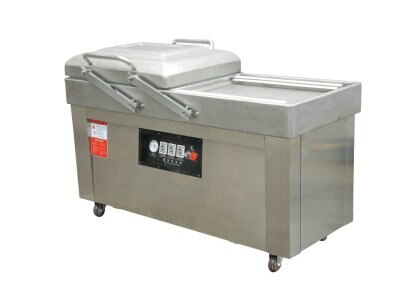 | DOUBLE CHAMBER VACCUM PACK MACHINE ₹175000 DZ 500 / 600 MODEL ARE AVAILABLE WITH DOUBLE CHAMBER SEALING SIZE 500 / 600 MM WITH 12 MM POWER 440 VAC -3 PH 3.5 KW POWER SPEED 6-8 PACK / MIN View product → |
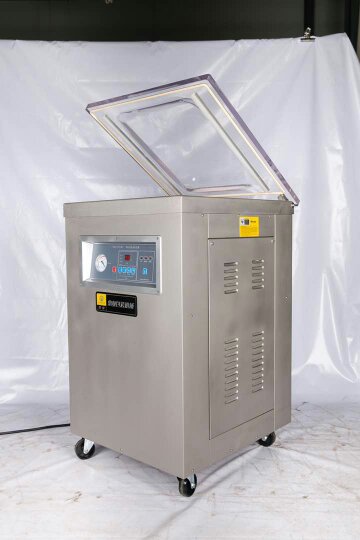 | ₹55000 Product Details: Sealing length 500X 10mm Weight 120kgs Machine size 760X700X 1050mm By utilizing our years of experience, we bring forth a... View product → |
Frequently asked questions
Where do double-chamber vacuum machines fit Pune operations?
They suit food processors, pharmaceutical suppliers and engineering manufacturers packing products such as meat, seafood, cheese, prepared foods, coffee, spices, powders and non-food components in flexible barrier pouches.
How does a two-chamber vacuum machine affect output?
One chamber evacuates and seals while the operator loads the other, reducing idle time compared with a single-chamber workflow. Actual output depends on pouch size, product height, vacuum time, seal time and loading speed.
When is double-chamber vacuum packaging better than another format?
Choose it when flexible barrier pouches, air removal and reliable heat seals matter more than rigid-pack presentation or continuous high-speed automation.
What should you specify before buying a double-chamber vacuum machine?
Provide pouch length, width and thickness; product dimensions; target vacuum level; seal length; chamber clearance; cycle time; and the pouch film structure compatible with your product.