
A shrink tunnel that reaches its displayed temperature can still deliver uneven packs, stalled conveyors, or repeated breaker trips. You will be able to separate a repairable fault from a retrofit or replacement decision, compare Delhi manufacturers on serviceability, and specify an acceptance test that reflects production conditions.
Key takeaways
- Record cold, unloaded, and loaded tunnel performance before approving repairs.
- Compare airflow, controls, insulation, parts access, and recovery time—not heater wattage alone.
- Match tunnel opening and conveyor capacity to your product dimensions and throughput.
- Require a loaded acceptance test with temperature, seal quality, speed, and fault records.
Start with an as-found baseline before choosing repair or replacement
Do not choose a replacement because one heater has failed. Establish an as-found baseline while the tunnel is cold and under normal load, then compare the repair cost, downtime, stability risk, and parts availability with a new machine. Without this record, new heaters can hide airflow, wiring, conveyor, or insulation faults.
Record these before changing components:
- Phase current, heater-bank resistance, blower current, conveyor speed, and emergency-stop operation.
- Chamber temperature at several positions, plus the controller display and an independent thermometer reading.
- Sensor type, polarity, position, calibration, SSR or contactor switching, and over-temperature protection.
- Insulation condition, belt and bearing wear, tunnel opening, film type and thickness, pack dimensions, target packs per minute, and electrical supply.
A shrink tunnel machine comparison in Delhi should use the loaded film-and-product trial, not heater wattage alone.
| Option | What it means | When it applies |
|---|---|---|
| Repair | Replace the failed component and retain the machine design | One isolated fault exists and the baseline is stable |
| Recover | Clean, test, restore, and recommission the complete tunnel | Several worn parts exist but the frame, conveyor, and controls remain serviceable |
| Retrofit | Add new controls, heaters, sensors, or conveyor components | The structure is sound and installation disruption matters |
| Replace | Install a new, matched tunnel | Repeated failures, obsolete parts, unsafe wiring, poor insulation, or unstable temperature control make recovery uneconomic |
Compare Delhi manufacturers by recovery capability, not heater wattage
Heater wattage does not prove recovery capability. For a packaging machine manufacturer, a shrink tunnel machine for comparison in Delhi needs a documented path from inspection to loaded commissioning, including what is retained, what is replaced, and who supports the machine after handover.
A larger heater can still leave cold spots if airflow, dwell time, or sensor control is wrong.
| Evidence to compare | Strong recovery capability | Warning sign |
|---|---|---|
| Parts and drawings | Heater, thermocouple, blower, belt, relay and controller part numbers; electrical drawings and recommended spares | Proprietary dimensions or undocumented substitutions |
| Service boundary | Written Delhi response time, commissioning scope and warranty for retained and new parts | “Service available” without a time or coverage |
| Control verification | Sensor position and polarity, calibration, over-temperature protection, switching test and independent chamber-temperature reading | Controller display accepted as proof |
| Retrofit plan | Clear list of conveyor, panel, insulation, guarding and controls kept or replaced | Retrofit offered without checking voltage, airflow or belt condition |
Ask the shrink tunnel equipment manufacturer to run your actual PVC, PE or polyolefin film with the product at target packs per minute. Require records for entry temperature, tunnel temperature, conveyor speed, pack dwell time and seal quality; film substitution without retuning can cause holes or incomplete shrinkage.
- Prefer locally available heaters, sensors, relays, belts and bearings.
- Reject quotations that omit recovery lead time, spare availability or a loaded acceptance test.
- Compare the shrink tunnel machine repair in Delhi plan against the machine’s failure history, not the supplier’s location alone.
Use symptoms to identify the failed subsystem
The symptom usually identifies the subsystem to test first, not the heater to replace. Confirm the actual film type—PVC, PE, or polyolefin—its thickness, product dimensions, and target packs per minute before changing temperature or conveyor speed.
- Uneven shrinkage: check conveyor speed variation, belt tracking, product spacing, blower airflow, and blocked hot-air outlets. An overloaded conveyor can slow under accumulation.
- Cold spots: measure chamber temperature at several positions with an independent probe; inspect failed heaters, loose terminals, sensor position, insulation, and blower rotation.
- Torn film or holes: check excessive temperature, excessive dwell time, sharp product edges, blocked airflow, and film substitution without retuning the tunnel.
- Conveyor stoppages: inspect motor overloads, gearbox, bearings, belt tension, tracking, transfer height, and the conveyor’s rated load.
- Temperature overshoot: test sensor type and polarity, sensor placement, controller calibration, SSR or contactor switching, and over-temperature protection. The display alone proves nothing.
- Breaker trips: isolate heater banks, blower motor, wiring insulation, earth leakage, contactors, and supply voltage before resetting the breaker.
- Poor seals: inspect the upstream sealing jaw, seal-bar temperature, dwell pressure, contaminated film, and film alignment; a tunnel cannot repair a weak seal.
A proper shrink tunnel machine repair in Delhi ends with a loaded trial using your film, product, and production speed. Record chamber readings, pack temperature, dwell time, seal quality, and rejected packs before accepting the recovery.
Match the tunnel type and opening to the product and throughput
A 400 × 250 mm opening and 45-inch tunnel length fit only when the largest loaded pack passes through with clearance and receives enough residence time. The opening is 400 mm wide by 250 mm high; measure the product after film application, including protruding corners and unstable stacking.
The 45-inch length equals about 1,143 mm. At 10 seconds of required dwell, conveyor speed is about 114 mm per minute; at five seconds, it is about 229 mm per minute. Compare that speed with your target packs per minute and occupied tunnel length, not the supplier’s headline output.
Check these points before accepting the size:
- Test the actual PVC, PE, or polyolefin film at its production thickness; each needs different temperature, airflow, and dwell settings.
- Reject the tunnel if the product deforms, contains heat-sensitive contents, or needs moisture control rather than heat shrinking.
- Choose a chamber or hood system for intermittent low-volume work when a continuous conveyor would waste heat and floor space.
- Confirm that the loaded pack leaves enough clearance around the opening for airflow; a tight fit creates cold edges and incomplete shrinkage.
- Run the largest pack at the required packs per minute, then inspect seals, corners, holes, and film tension.
A shrink tunnel machine comparison in Delhi is meaningful only when these measurements accompany heater capacity, conveyor range, and electrical supply. A larger heater cannot compensate for inadequate dwell or poor hot-air circulation.
Write the comparison around specifications, parts, and a loaded acceptance test
Send every bidder the same data sheet: film type and thickness, pack dimensions, entry temperature, required packs per minute, tunnel opening, conveyor-speed range, and electrical supply. Your packaging machine manufacturer brief should make each shrink tunnel machine for comparison in Delhi answer those figures, not just quote heater wattage.
| Item | Require in the quotation | Check during acceptance |
|---|---|---|
| Product and process | Film, pack, speed, opening, dwell time | Run the actual film-and-product combination at target speed |
| Controls | Thermocouple type and position, controller, SSR or contactor, over-temperature cut-out | Compare the display with an independent thermometer under load |
| Parts | Heater specification, blower model, belt or mesh, bearings, relays, sensor part numbers | Confirm fitted parts match the drawings and spare-parts list |
| Recovery boundary | Retained parts, replaced parts, warranty, electrical drawings | Test conveyor, guarding, restart, and emergency stop |
| Service | Delhi response time and recommended spares | Record the fault-report route and escalation contact |
A loaded acceptance test must produce saleable packs, not an empty chamber that reaches its setpoint. Run an agreed production batch and record packs per minute, tunnel temperature at several points, conveyor speed, seal quality, shrink uniformity, breaker trips, alarms, and unplanned stops.
Reject the machine if the independent reading, output, or safety interlock fails the agreed limit.
For a shrink tunnel equipment manufacturer, locally available heaters, sensors, relays, belts, and bearings reduce recovery risk. For shrink tunnel machine repair in Delhi, ASN Packaging PVT LTD should be assessed against this same parts, documentation, and loaded-test matrix.
Related products
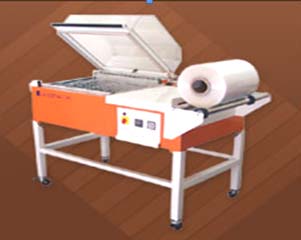 | ₹38000 It is suitable for heavy weight products for multiple packaging matrix, Requires two rolls of packaging materials pneumatic web sealer with stick... View product → |
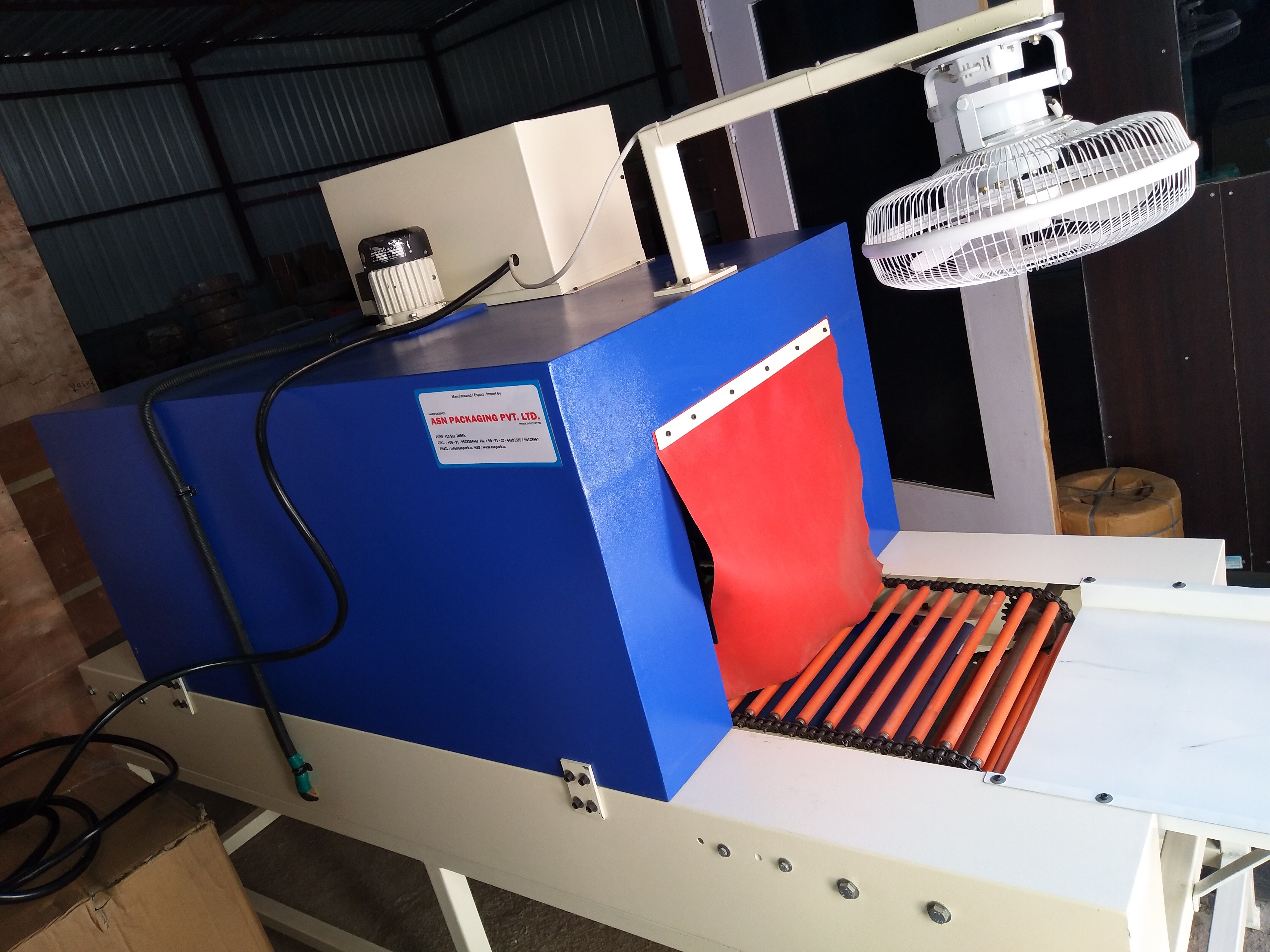 | ₹135000 SHRINK TUNNEL MACHINE MODEL 450 ASN SIZE 400 X 250 MM LENGTH 45 INCH POWER 6-8 KW , 440 VAC -3 PH HEAVY-DUTY STRUCTRE View product → |
Frequently asked questions
What should you record before repairing or replacing a shrink tunnel machine?
Record the cold condition, heater response, tunnel temperature, conveyor speed, airflow, power draw, seal quality, product results, and faults under normal load.
How should you compare shrink tunnel machine manufacturers in Delhi?
Compare recovery time, temperature control, airflow design, insulation, conveyor construction, replacement parts, service access, documentation, and loaded test results instead of heater wattage alone.
Which symptoms indicate a failed shrink tunnel subsystem?
Uneven film shrinkage points to airflow or heater distribution; slow recovery points to heaters, controls, or power supply; conveyor faults point to the drive, chain, belt, or bearings.
How do you choose the correct shrink tunnel opening and tunnel type?
Measure the wrapped product, allow clearance around every side, then match the tunnel opening, conveyor width, tunnel length, heat pattern, and speed to product dimensions and required throughput.
What should a shrink tunnel machine acceptance test include?
Test representative products at the specified speed and load, record temperature stability and recovery, inspect shrink appearance and seals, verify safety controls, and document faults and corrective actions.