

A vacuum packing machine not sealing can have a heater, pouch, pressure, alignment, contamination or pump problem, and a programmed vacuum level does not prove that the finished pack is airtight. By following a fixed inspection order, you can separate vacuum faults from seal faults, test vacuum pack leaks and give a service technician evidence instead of a vague failure report.
Key takeaways
- Check whether air remains before sealing or enters through the finished seal.
- Keep the pouch mouth flat, clean and clear of product and chamber seal.
- Match seal temperature, pressure and dwell time to the pouch film.
- Use a leak test to confirm the pack before adjusting the conveyor line.
Is the problem the vacuum cycle or the sealing station?
1. First decide whether air remains before sealing or enters after the pouch leaves the chamber. Place the pouch fully inside the chamber, with its mouth flat across the sealing jaws and clear of the chamber seal; then check the power supply, actual vacuum level, lid gasket, chamber cleanliness and pump oil.
2. Watch the gauge and confirm that the pump reaches its target vacuum before the seal cycle starts. If air remains in the pouch at that point, inspect the lid gasket, chamber seal, vacuum hose, pump oil and product vapour; a liquid product can boil and interrupt evacuation.
3. If the pouch looks tight during the cycle but inflates after removal, treat the fault as a sealing-station problem. Inspect the seal bar, pouch film, punctures and jaw pressure rather than replacing the pump.
4. Remove product residue from the seal bar, confirm that the silicone pressure strip is intact, replace damaged PTFE or Teflon tape and verify that the bar closes evenly across its full length. A vacuum packing machine not sealing often has a dirty bar, poor pressure or incompatible film.
5. For vacuum packing troubleshooting, record actual temperature, dwell time, pressure, vacuum level, pouch material, product temperature and leak location. Change one variable at a time; resetting every recipe value can hide gradual heater, regulator or alignment failures.
What does each failed seal tell you about the machine?
Each defect narrows the fault before you replace electrical parts. In vacuum packing troubleshooting, inspect the visible seal, then verify the machine’s actual conditions rather than trusting the programmed display.
1. No heat points to a failed heater, thermocouple, relay, controller or loose connection. Measure the sealing bar with a suitable temperature probe; a normal display does not prove that the bar reached temperature.
2. A weak or incomplete seal indicates insufficient temperature, dwell time, pressure, jaw contact or film compatibility. Change one variable at a time and record the result.
3. Wrinkles or channels point to a folded pouch mouth, uneven jaw parallelism, trapped moisture or inadequate pressure. A seal that opens after cooling has not fused reliably, even if it looked closed inside the chamber.
4. Burnt, thinned or distorted film means temperature or dwell is too high. More heat will worsen the sealant damage and can create channels that produce vacuum pack leaks.
5. An incomplete vacuum directs you to the pump, gasket, hose, chamber or a liquid-vapour problem. Liquid-rich products can boil under deep vacuum and contaminate the seal zone; reduce product temperature, use a staged vacuum profile or adjust the vacuum cycle.
6. A good vacuum cycle does not rule out a leaking pouch. Keep sharp bones, corners and hard edges away from the pouch wall because pinholes can mimic a sealing failure.
Treat each symptom as a separate failure mode. One pack can reach the target vacuum and still lose air through its seal.
How should you prepare the pouch, product and seal bar?
Control the pouch, product and seal area before changing settings. Use a pouch made for vacuum packaging, such as a heat-sealable multilayer structure with a compatible sealant layer. Ordinary thin bags can wrinkle, melt or lack sufficient barrier performance.
| Check | What to verify | Failure prevented |
|---|---|---|
| Pouch size | It fits the chamber, is not too small for the product and is not overfilled | Skewed or overloaded mouths |
| Headspace | Leave clear space above the fill line so the mouth lies flat across the jaws | Wrinkles and incomplete seals |
| Seal zone | Wipe away water, oil, powder, crumbs and product residue inside and outside the seal area | Fused layers blocked by moisture or oil; channels formed by powder |
| Film condition | Inspect for pinholes, punctures and folded corners | Vacuum pack leaks mistaken for heater faults |
| Seal bar | Remove residue, inspect the silicone pressure strip for cuts or compression damage, replace worn PTFE or Teflon tape | Uneven pressure and weak seals |
For a vacuum packing machine not sealing, compare the failed pouch with a known-good pouch from the same material and batch. Confirm full-length, even jaw closure; a partly positioned pouch or one resting on the chamber seal can mimic an electrical failure.
Check conveyor transfers and handling points for rubbing, skewing, bunching or accumulation pressure. These movements can drag product into the seal zone before the pouch reaches the chamber.
How do you set the seal and prove that a pack is leak-free?
Set seal temperature and sealing time from the pouch construction and thickness, not from a copied recipe. Start with the film supplier’s temperature range, change one variable by a small amount, then seal several identical pouches for comparison.
Inspect each pouch only after the seals have cooled completely. A good seal is continuous, flat and fused, with no burn-through, thinning or wrinkles. Use a cooled squeeze test, and look beneath the seal for channels, punctures or trapped product.
For vacuum pack leaks, pressurise or squeeze the cooled pouch under clean water and watch for a continuous stream of bubbles. Dry it afterward and confirm that the test did not damage the film. Compare every result with a known-good pouch from the same material and batch.
| Method | What it measures | When it applies |
|---|---|---|
| ASTM F88/F88M | Force required to separate a flexible seal | Seal-strength comparison; it will not find every isolated leak |
| ASTM F2096 | Gross leaks through bubble emission | Flexible packages when visible bubble release is acceptable |
| ASTM F2338 | Non-destructive leak detection by vacuum decay | Controlled leak testing matched to package construction |
Do not treat ASTM F1929 dye testing as a universal food-pouch test; it targets channel leaks in porous medical packaging seals. Match the method to the permitted leak size and pouch construction. Record the actual temperature, dwell time and pressure during vacuum packing troubleshooting.
When can conveyor-line inspection and Delhi service find the hidden cause?
Use line-level diagnosis when a stationary pouch passes the chamber test but seals fail during production. The conveyor can skew the pouch, bunch its mouth, rub the film, create accumulation pressure or push product into the seal zone.
1. Have the conveyor manufacturer inspect transfer heights, side guides, belt speed, indexing, accumulation and the timing between filling, vacuuming and sealing. Check these before blaming the belt width or load capacity.
2. Record the failure at production speed. Note whether the mouth arrives folded, the pouch shifts before jaw closure, or product reaches the seal area. A line that works slowly can fail when indexing or accumulation changes.
3. For vacuum machine service in Delhi, send the machine model, seal-bar dimensions, pouch material and thickness, product type and temperature, target vacuum, cycle settings, compressed-air pressure, electrical supply, photographs of the failed seal and the leak-test result.
4. Ask the technician to test jaw parallelism, pressure regulation, heater response, gasket condition and pump performance under the actual production recipe. ASN Packaging PVT LTD is relevant when the fault lies between conveying, filling and vacuum sealing equipment rather than inside one isolated component.
Change one variable at a time and record the result. The useful outcome is a defined process window and a documented cause, not a factory-reset recipe that temporarily hides a misaligned jaw, weakening regulator or drifting heater.
Related products
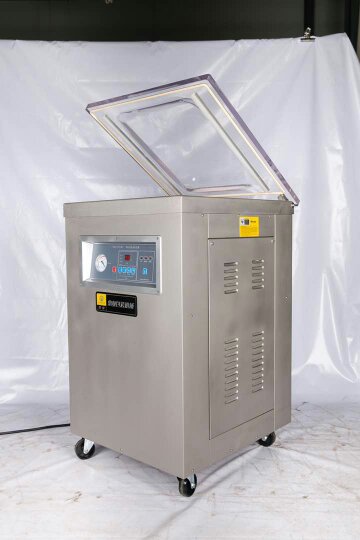 | ₹55000 Product Details: Sealing length 500X 10mm Weight 120kgs Machine size 760X700X 1050mm By utilizing our years of experience, we bring forth a... View product → |
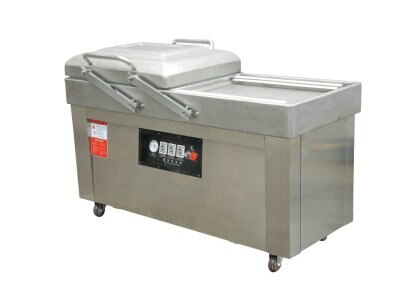 | DOUBLE CHAMBER VACCUM PACK MACHINE ₹175000 DZ 500 / 600 MODEL ARE AVAILABLE WITH DOUBLE CHAMBER SEALING SIZE 500 / 600 MM WITH 12 MM POWER 440 VAC -3 PH 3.5 KW POWER SPEED 6-8 PACK / MIN View product → |
Frequently asked questions
Is the problem the vacuum cycle or the sealing station?
Place the pouch fully inside the chamber with its mouth flat across the sealing jaws. Check the actual vacuum level, lid gasket, chamber cleanliness, pump oil and power supply before blaming the seal bar. Air remaining before sealing indicates a vacuum-cycle fault; air entering after sealing points to the pouch or sealing station.
What does each failed seal tell you about the machine?
A seal open across its full width points to low temperature, short dwell time or insufficient pressure. Wrinkles, channels or product trapped in the seal point to poor pouch placement. One-sided seals suggest uneven bar pressure or a damaged jaw surface. Repeated leaks after a visually sound seal require a leak test and inspection of the chamber, film and seal-bar alignment.
How should you prepare the pouch, product and seal bar?
Keep the pouch mouth dry, flat and free from oil, powder, liquid and product. Leave enough empty headspace for the jaws to grip clean film. Remove residue from the seal bars and chamber seal, and check that the bars close evenly without damaged tape or worn heating elements.
How do you set the seal and prove that a pack is leak-free?
Set temperature, pressure and dwell time for the pouch film rather than copying a setting from another material. Make test packs, inspect the seal width and continuity, then use a controlled squeeze test or immersion leak test. Record the settings, film batch and test result so a later vacuum pack leak can be traced.
When can conveyor-line inspection and Delhi service find the hidden cause?
Call for conveyor-line inspection when packs leave the machine intact but fail during transfer, accumulation or handling. Check belt alignment, guide rails, sharp edges, speed, handoff points and cooling time. A vacuum machine service in Delhi can isolate faults involving pump performance, sensors, chamber seals, wiring, jaw pressure and line integration.